Understanding UM/UIM

UM/UIM stands for Uninsured Motorist and Underinsured Motorist coverage. These are two separate but closely related types of auto insurance that protect you and your passengers if you're injured in a crash caused by another driver who either has no insurance (UM) or whose insurance limits are too low to cover your medical expenses, lost wages. And other damages (UIM). In Georgia, drivers are legally required to carry minimum liability insurance. But not everyone complies. Even those who do often carry only the state-mandated minimums, which may be insufficient after a serious crash. UM/UIM coverage fills this gap by allowing you to file a claim with your own insurance company to recover the compensation you would have received from the at-fault driver’s insurer if they had adequate coverage.
UM and UIM are typically sold together as a single policy add-on. Though they serve distinct purposes. Uninsured Motorist coverage applies when the at-fault driver has no insurance at all. While Underinsured Motorist coverage applies when the at-fault driver’s insurance limits are exhausted before your damages are fully covered. For example, if the other driver carries Georgia’s minimum bodily injury liability limit of ,000 but your medical bills total ,000, UIM coverage can step in to pay the remaining ,000, assuming your UIM limits are high enough. Without UM/UIM, you would have to sue the at-fault driver personally, which often results in little or no recovery if the driver lacks assets.
How UM/UIM Works?
UM/UIM coverage operates as a safety net within your own auto insurance policy. When you purchase UM/UIM, you select coverage limits, which are typically expressed as two numbers (e.g., ,000/,000). The first number represents the maximum amount your insurer will pay per person injured in a crash. While the second number represents the maximum amount per accident. These limits can be set at or above Georgia’s minimum liability requirements. But many drivers opt for higher limits to better protect themselves. After a crash, you file a UM/UIM claim with your own insurer, who then investigates the accident to confirm the other driver was at fault and either uninsured or underinsured.
A common issue is Once the claim is approved, your insurer compensates you up to your UM/UIM limits for covered damages, which typically include medical expenses, lost income. And pain and suffering. But UM/UIM doesn't cover property damage (e.g., vehicle repairs) unless you purchase separate Uninsured Motorist Property Damage (UMPD) coverage, which is optional in Georgia. It’s also important to note that UM/UIM claims are subject to the same policy exclusions and conditions as other insurance claims, such as timely reporting of the accident and cooperation with the insurer’s investigation. If your damages exceed your UM/UIM limits, you may still pursue the at-fault driver personally. Though recovery is often difficult.
Why UM/UIM Matters?
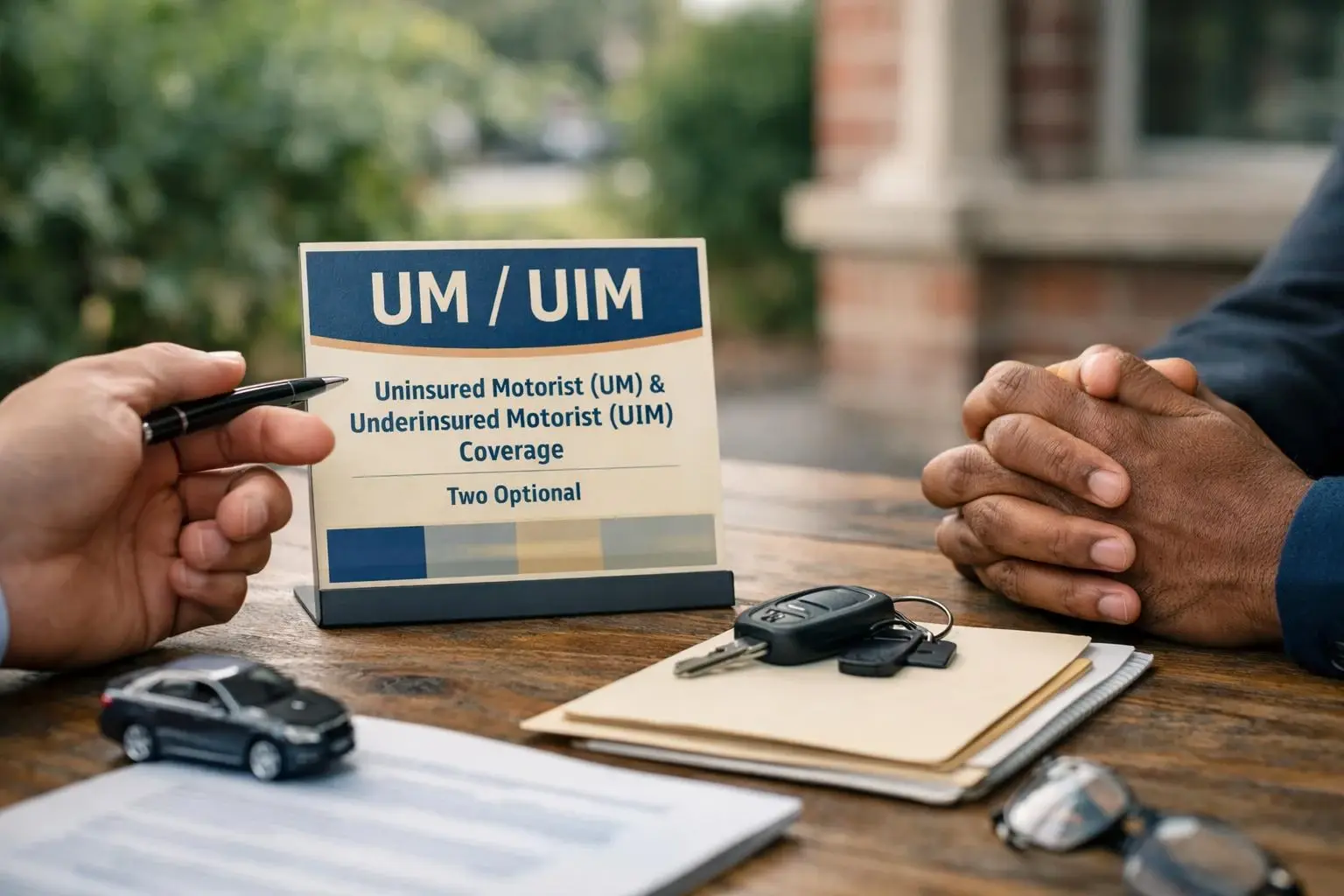
UM/UIM coverage is critical because it protects you from financial hardship after a crash caused by an uninsured or underinsured driver. Even though Georgia law requires all drivers to carry liability insurance, studies show that roughly 12% of Georgia drivers are uninsured. And many more carry only the minimum required limits. Without UM/UIM, you could be left paying out-of-pocket for medical bills, rehabilitation costs. And lost wages, even if the crash was not your fault. This coverage also provides clear next steps, knowing that you and your passengers are protected regardless of the other driver’s insurance status.
Another key benefit of UM/UIM is that it often includes coverage for hit-and-run accidents, where the at-fault driver flees the scene and can't be identified. In such cases, UM coverage can step in to compensate you for injuries, provided you report the accident to law enforcement and your insurer promptly. Without UM/UIM, victims of hit-and-run crashes may have no recourse for recovering damages, leaving them to rely on health insurance or personal savings to cover their expenses.
When UM/UIM Matters Most?
UM/UIM coverage becomes especially important in several common scenarios. First, it matters most after crashes involving serious injuries, where medical bills and lost wages can quickly exceed the at-fault driver’s insurance limits. For example, a single night in the hospital can cost thousands of dollars. And long-term rehabilitation or disability can push damages into the hundreds of thousands. UM/UIM coverage ensures you are not left paying these costs yourself. Second, UM/UIM is critical in hit-and-run accidents, where the at-fault driver cannot be identified and no liability insurance exists to cover your damages. Finally, UM/UIM matters when the at-fault driver’s insurance company denies the claim or delays payment, leaving you without compensation for months or even years.
In Georgia, UM/UIM coverage is also valuable because the state follows a modified comparative negligence rule, meaning your compensation can be reduced if you are found partially at fault for the crash. Even if you share some blame, UM/UIM coverage can still provide partial compensation, whereas relying solely on the other driver’s insurance might leave you with nothing. And UM/UIM can cover passengers in your vehicle, pedestrians. And cyclists injured by an uninsured or underinsured driver, making it a versatile protection for anyone on the road.