How can a bike lane help prove driver responsibility?
Bike lane evidence can show where the rider traveled and whether the driver entered, crossed, or failed to yield in that space. The review also considers traffic signals, road conditions, vehicle damage, and witness accounts. Photos and records gathered near the crash can help preserve the facts before conditions change.
What should I bring to a first legal consultation?
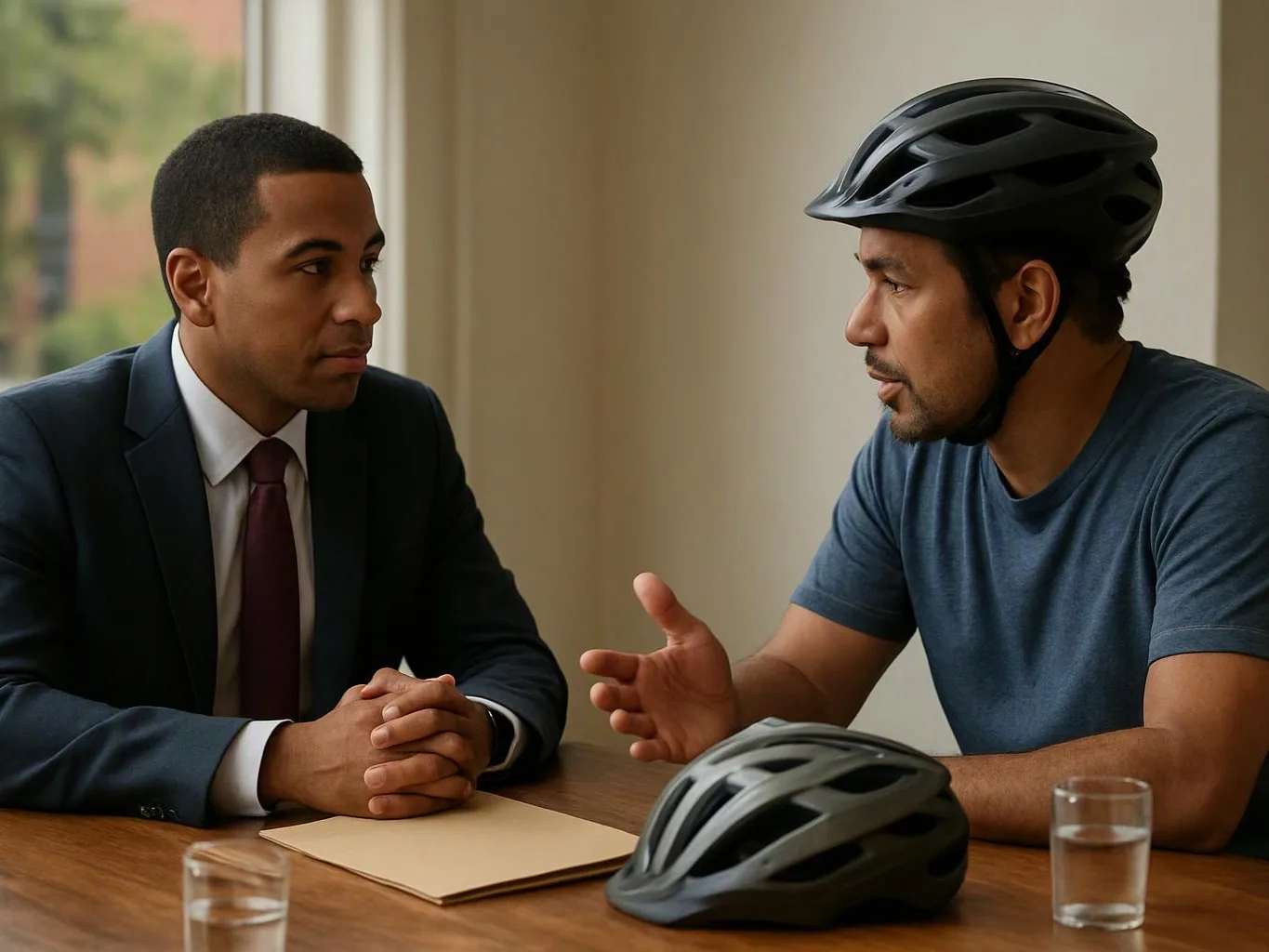
Crash records, medical records, photographs, insurance messages, witness details, and wage information are useful starting materials. Bring what you have, even if the file is incomplete. Our team can identify additional records during the initial review and explain which documents matter most to the responsibility and loss questions.
Which part of the crash decides the legal scope?
The responsibility dispute decides the legal scope when the driver denies fault or blames the rider. Evidence about traffic signals, lane position, distraction, road conditions, and impact damage can shape the work. Injury severity, medical treatment, lost wages, and property damage also affect the claim’s demands and litigation needs.
When should I preserve surveillance footage?
Surveillance footage should be identified and requested as soon as possible after the crash. Camera location, recording direction, and the likely collision period guide the search. Our team can assess whether a business, property, or traffic system may hold useful video and how it connects to the responsibility analysis.
Why do medical records matter in a bicycle injury claim?
Medical records connect reported injuries to the bicycle crash and describe the treatment that followed. They can also show symptoms, diagnoses, restrictions, and ongoing care. Those records support the medical expense and pain claims, while wage records help explain work losses tied to the injury.
How does a claim move from the first call to the last step?
A bicycle injury claim moves from intake to evidence review, loss analysis, insurance negotiation, settlement discussion, and possible litigation. Atlanta Auto Law begins by learning what happened and reviewing available records. If negotiation does not resolve the dispute, discovery, mediation, or trial representation may follow.
What if the driver’s insurer asks for a recorded statement?
A recorded statement can affect how the insurer frames responsibility and injury facts. Speak with Atlanta Auto Law before giving one, so the request and the claim context can be reviewed. Keep all insurer messages and avoid guessing about facts you cannot recall.