
What Is Strict Liability?
Strict Liability is a legal rule that may hold a manufacturer responsible for harm from a defective product without proof that the manufacturer acted carelessly. In a product injury claim, the injured person must still connect the product defect to the harm. The rule does not make every product injury a valid claim.
Quick Facts About Strict Liability
- Category
- Product injury law
- Used for
- Claims involving defective products
- Common confusion
- Automatic payment after an injury
- Often discussed with
- Product Liability Representation
Key Takeaways About Strict Liability
- The product's condition is central to the claim.
- Photos and purchase records can help establish the product's history.
- An injury alone doesn't establish a product defect.
How Strict Liability Works

Strict liability claims examine the product and the events surrounding an injury. The details help show whether a defect existed and how it led to harm. A claim may involve a flaw in how a product was made or designed. Related service: Product Liability Representation.
Related glossary terms: Design Defect, Failure to Warn, Negligence.
A design defect concerns the product's planned design. A manufacturing defect involves a problem that arose while the product was made. A claim may also involve a missing or inadequate warning about a product risk.
Evidence can include the product itself, its packaging and records of the injury. Photos may show damage or the setting where the incident happened. The product's history also matters, including any repairs or changes made after purchase. The facts guide which claims fit the situation and which parties may be involved.
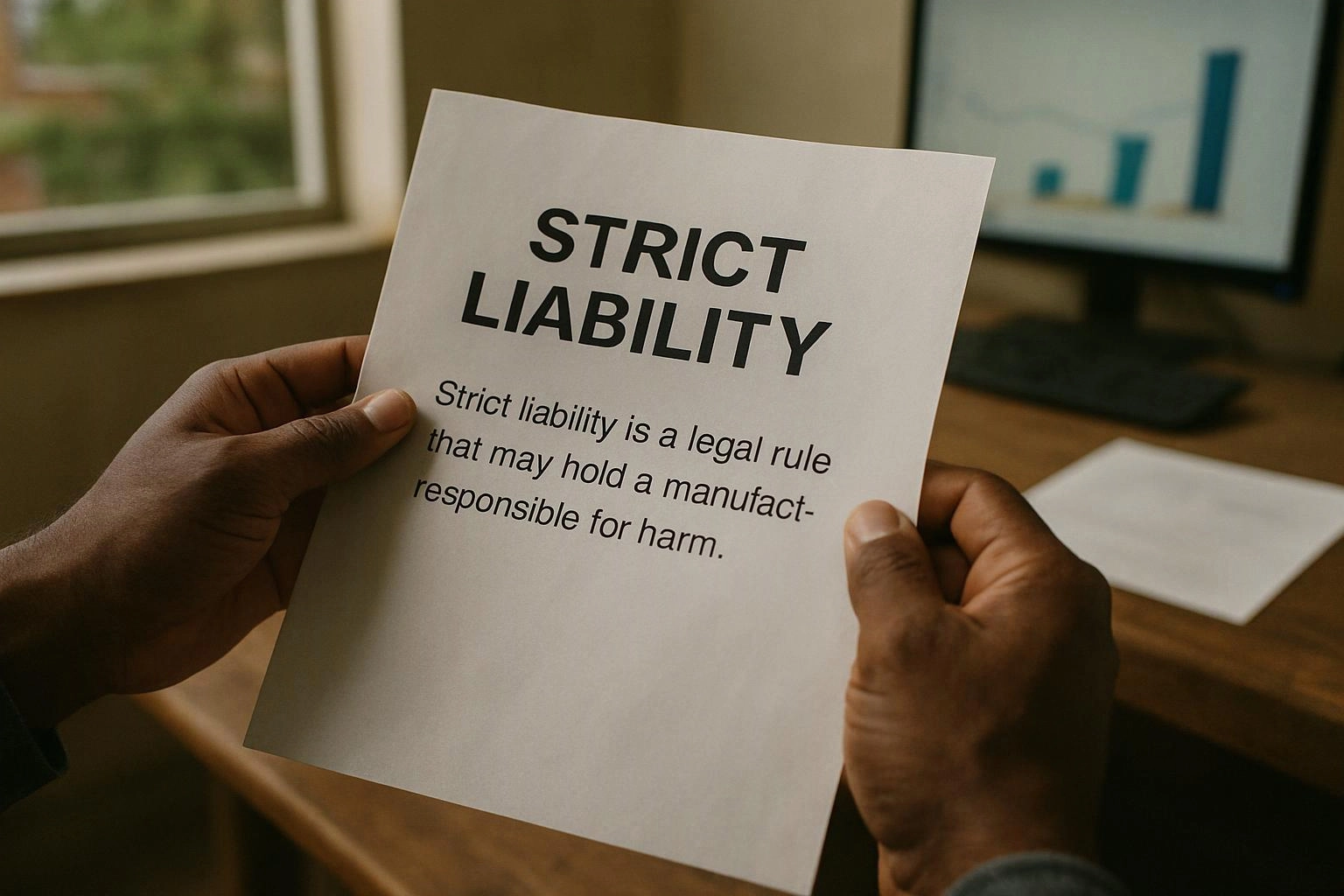
From the Atlanta Auto Law team
When we review a product injury claim, we look at the product's condition and how the injury happened. We also check available records for repairs or changes that could affect the claim. Packaging and instructions can help us understand the information supplied with the product.
Strict Liability in Practice: A Real-World Example
A driver is injured when a car seat's latch breaks during normal use. A product liability claim may examine whether a defect in the latch caused the injury.
Related Services
Related Terms
Design Defect
A design defect is a flaw in a product's planned design that can make the product unsafe.
Failure to Warn
Failure to warn is a legal claim that a product maker failed to provide an adequate warning about a product risk, and that failure.
Negligence
Negligence is a failure to use reasonable care that causes harm to another person.
Product Recall
A product recall is an action that addresses a product problem after the product reaches users or sellers.
Atlanta Auto Law
Have Questions About Strict Liability?
Contact Atlanta Auto Law for practical guidance on Strict Liability and related personal injury attorney work in Atlanta.