
What Is Failure to Warn?
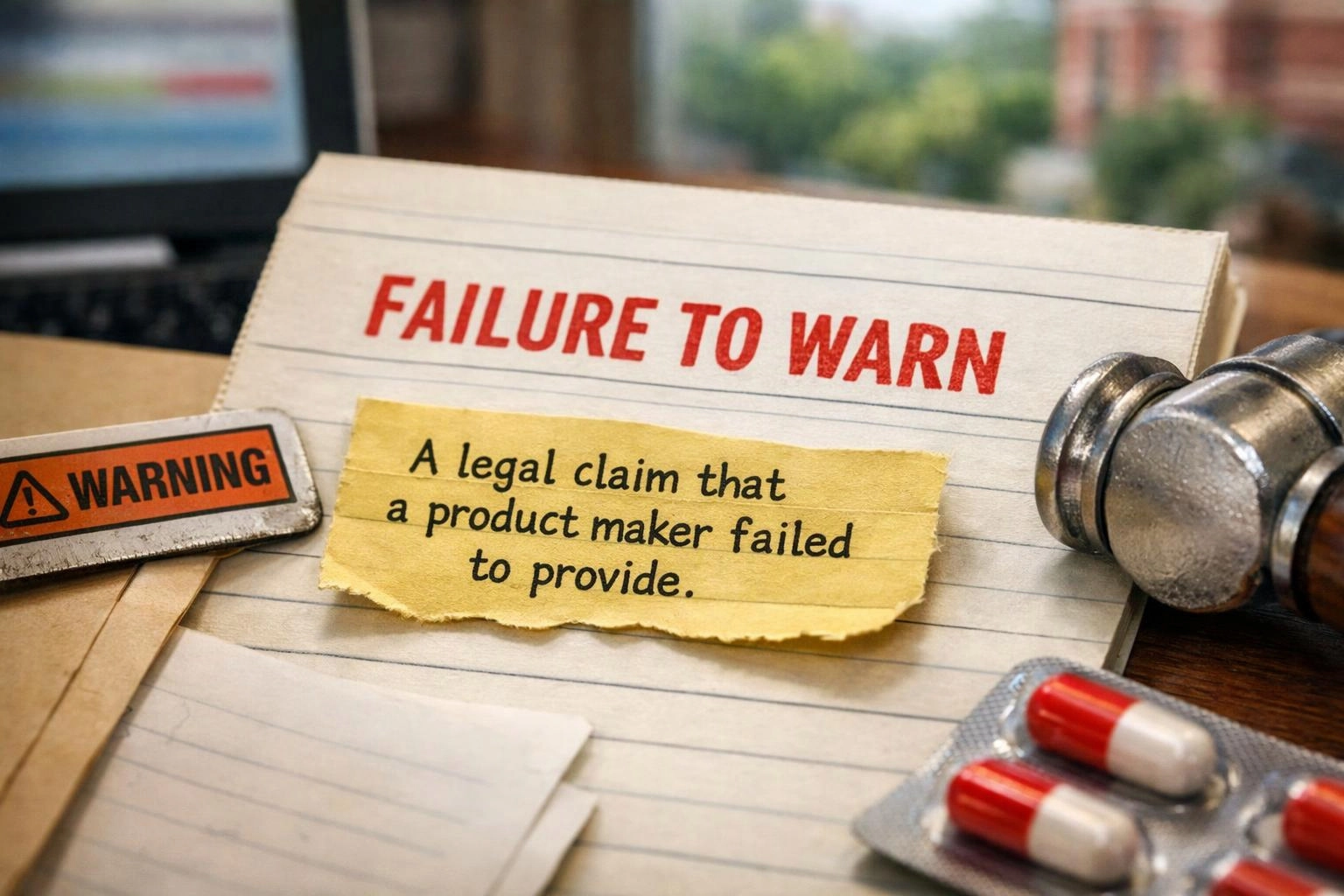
Failure to warn is a legal claim that a product maker failed to provide an adequate warning about a product risk, and that failure contributed to an injury. In a dangerous drug case, the claim may concern information about a serious side effect or another drug risk.
Quick Facts About Failure to Warn
- Category
- Product liability claim
- Used for
- Injuries linked to inadequate product warnings
- Common confusion
- Different from a design defect claim
- Also called
- Inadequate warning claim
- Often discussed with
- Dangerous Drug Injury Representation, Product Liability Representation
Key Takeaways About Failure to Warn
- The claim focuses on warnings, not the product's design.
- Drug labels and prescribing records can help explain what happened.
- A side effect alone doesn't establish a valid claim.
How Failure to Warn Works

A failure to warn claim examines the risk information a product maker gave and how that information reached the user. In a drug case, the warning may appear in prescribing information or other material sent to a doctor. The claim may also examine what the maker knew about the risk. Related service: Dangerous Drug Injury Representation.
Related glossary terms: Design Defect, Product Recall, Proximate Cause.
A drug warning claim can turn on whether a clearer warning would have changed a prescribing decision. Medical records can help explain the drug's role in the injury. A claim also needs a connection between the missing or unclear warning and the harm.
A design defect claim focuses on the product's design. A warning claim focuses on the information provided about its risks. The same injury may raise questions about both.
From the Atlanta Auto Law team
When we review a dangerous drug injury claim, we look at the warning available when the drug was prescribed. We also examine prescribing records and the reported injury. The doctor's understanding of the risk can help us assess whether a different warning could have affected the decision.
Failure to Warn in Practice: A Real-World Example
A patient develops a serious injury after taking a prescribed drug. The drug maker's warning omitted a known risk, and the prescribing doctor says that information would have changed the prescription decision.
Related Terms
Design Defect
A design defect is a flaw in a product's planned design that can make the product unsafe.
Product Recall
A product recall is an action that addresses a product problem after the product reaches users or sellers.
Proximate Cause
Proximate cause is a legal cause that connects someone's conduct to an injury closely enough to support liability.
Strict Liability
Strict Liability is a legal rule that may hold a manufacturer responsible for harm from a defective product without proof that.
Atlanta Auto Law
Have Questions About Failure to Warn?
Contact Atlanta Auto Law for practical guidance on Failure to Warn and related personal injury attorney work in Atlanta.