
What Is Proximate Cause?
Proximate Cause is the legal connection between a person’s conduct and an injury that makes the conduct a sufficiently direct cause of the harm. In a car accident claim, the connection must be supported by facts showing that the defendant’s negligent act led to the collision and resulting injuries without an unrelated event breaking the chain.
Quick Facts About Proximate Cause
Category
Negligence doctrine
Used for
Linking conduct to injury
Common confusion
Factual cause alone may not establish liability
Also called
Legal Cause
Often discussed with
Car Accident Representation
Key Takeaways About Proximate Cause
- The connection must be sufficiently direct.
- Evidence links the conduct, collision, and injury.
- Proximate cause is not the same as factual cause.
How Proximate Cause Works
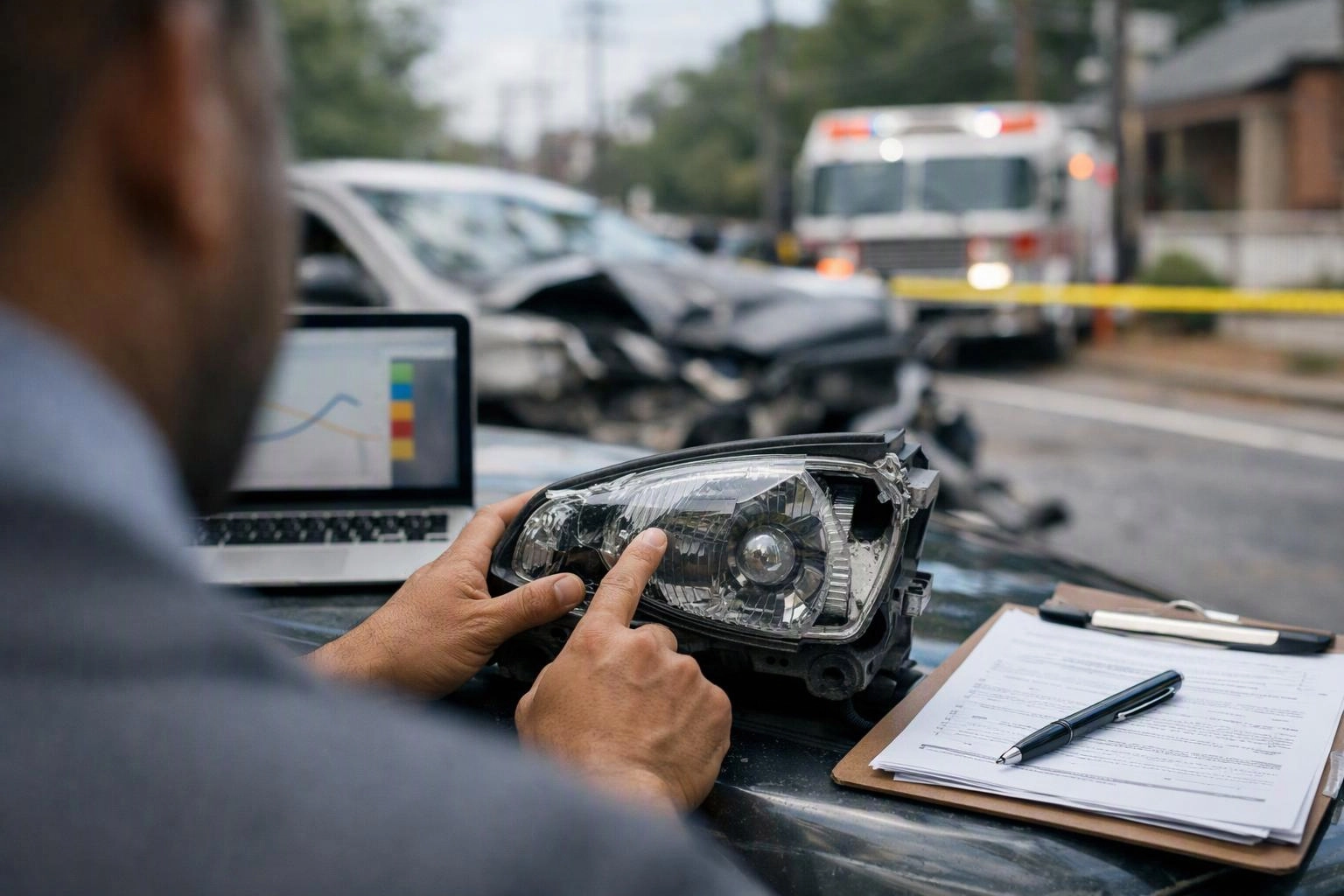
Proximate cause is assessed by tracing the events from the alleged negligent conduct to the injury. A driver’s failure to yield may lead to a collision, and the collision may lead to medical harm. The analysis asks whether the injury was a reasonably connected result of the conduct or whether an independent event interrupted the sequence.
Related glossary terms: Negligence, Accident Reconstruction, Burden of Proof.
Negligence supplies the conduct under review, while proximate cause addresses the legal connection between that conduct and the claimed harm. Evidence may include crash photographs, witness accounts, vehicle damage, medical records, and testimony about the sequence of events. The issue can affect which injuries and losses may be attributed to the accident.

From the Atlanta Auto Law team
When we review a car accident claim, we organize the evidence in the order events occurred. We compare the alleged driving error with the collision mechanics, medical records, and later events. Our team looks for facts that support a direct connection and facts that may interrupt that connection.
Proximate Cause in Practice: A Real-World Example
A driver turns left across oncoming traffic and strikes another vehicle. The other driver’s resulting neck injury may have proximate cause if the evidence connects the unsafe turn, the impact, and the injury without an unrelated intervening event.
Related Services
Related Terms
Negligence
Negligence is a failure to use the level of care that a reasonably careful person would…
Accident Reconstruction
Accident Reconstruction is a technical process that examines how a collision happened by analyzing physical evidence…
Burden of Proof
Burden of Proof is the responsibility to present enough reliable evidence to establish a claim or…
Comparative Negligence
Comparative Negligence is a legal rule that assigns each party a share of fault for an…
Atlanta Auto Law
Have Questions About Proximate Cause?
Contact Atlanta Auto Law for practical guidance on Proximate Cause and related personal injury attorney work in Atlanta.