
What Is Right of Way?
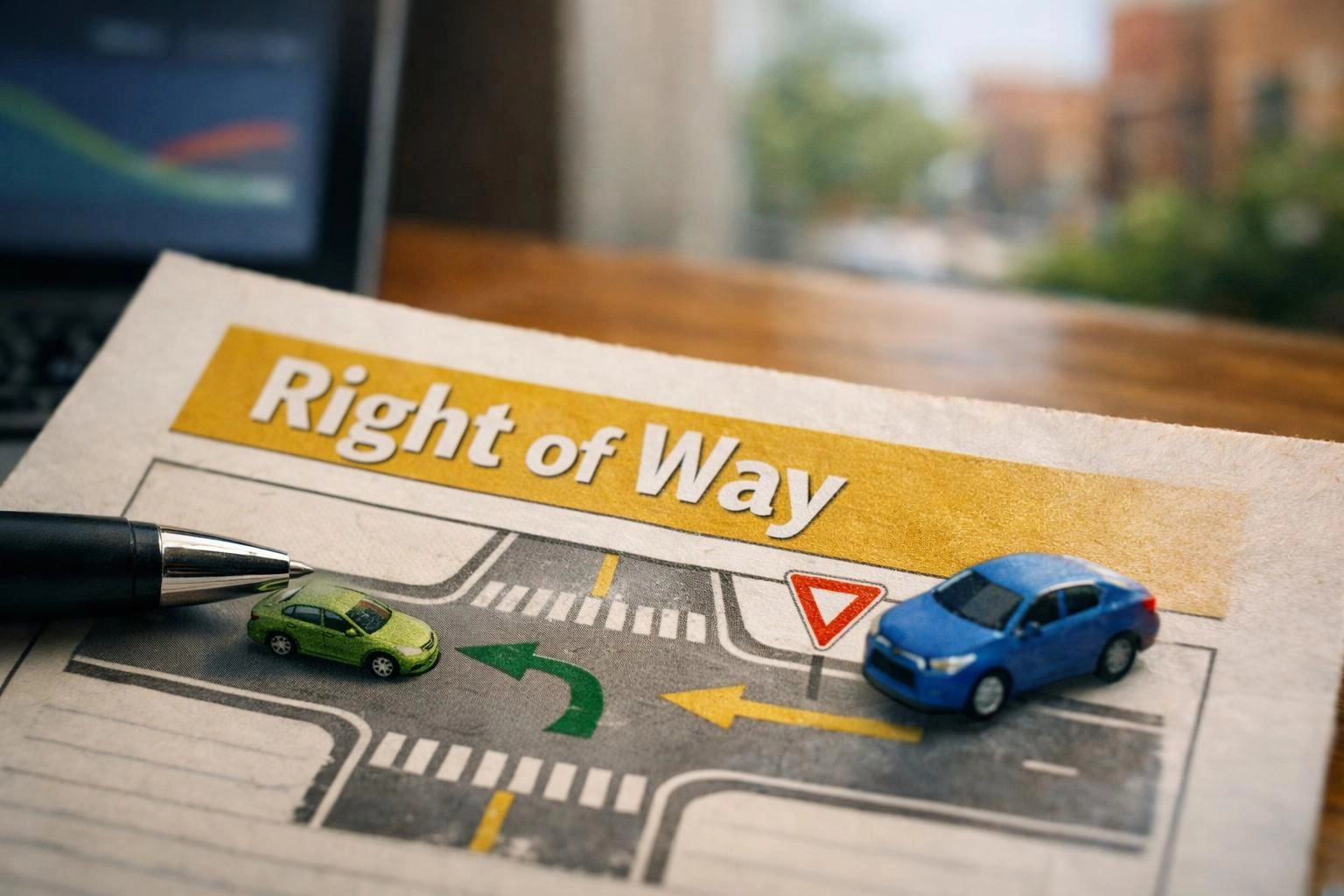
Right of Way is a traffic concept that determines who has priority to move through a shared space. It applies to situations involving people walking and people driving. Signals, road markings, and the actions of those involved can help explain who had priority at a particular moment.
Quick Facts About Right of Way
- Category
- Traffic priority
- Used for
- Assessing crossing conflicts
- Common confusion
- Priority versus fault
- Often discussed with
- Pedestrian Accident Representation
Key Takeaways About Right of Way
- Priority isn't the same as a guarantee of safety.
- The details at the crossing shape the analysis.
- A crosswalk alone doesn't settle every fault question.
How Right of Way Works

Right of Way works as a way to assess competing movements at a crossing. The layout of the road gives context to those movements. A marked crosswalk, for example, shows where a pedestrian's path meets traffic. Related service: Pedestrian Accident Representation.
Related glossary terms: Comparative Negligence, Duty of Care, Negligence.
A traffic signal can also help explain what each person saw. The signal facing a driver may differ from the one facing a pedestrian. The timing of a turn can shape the picture, too.
Priority and fault aren't identical concepts. A collision claim also looks at each person's actions and how those actions relate to the injury. For example, a driver's view of the crossing may matter alongside the pedestrian's path.
From the Atlanta Auto Law team
When we review a pedestrian accident claim, we look at the crossing from each person's view. We check the available scene evidence against accounts of the crash. A turn or an obstructed view can change how we understand the encounter.
Right of Way in Practice: A Real-World Example
A driver turns at an intersection as a pedestrian crosses in a marked crosswalk. In a pedestrian accident claim, the signal and the driver's path help explain the encounter.
Related Services
Related Terms
Comparative Negligence
Comparative negligence is a legal principle that weighs each person's role in causing an injury.
Duty of Care
A duty of care is a legal obligation to act with reasonable care toward others.
Negligence
Negligence is a failure to use reasonable care that causes harm to another person.
Distracted Driving
Distracted Driving is the act of operating a vehicle while attention shifts away from driving.
Atlanta Auto Law
Have Questions About Right of Way?
Contact Atlanta Auto Law for practical guidance on Right of Way and related personal injury attorney work in Atlanta.