
What Is Birth Asphyxia?
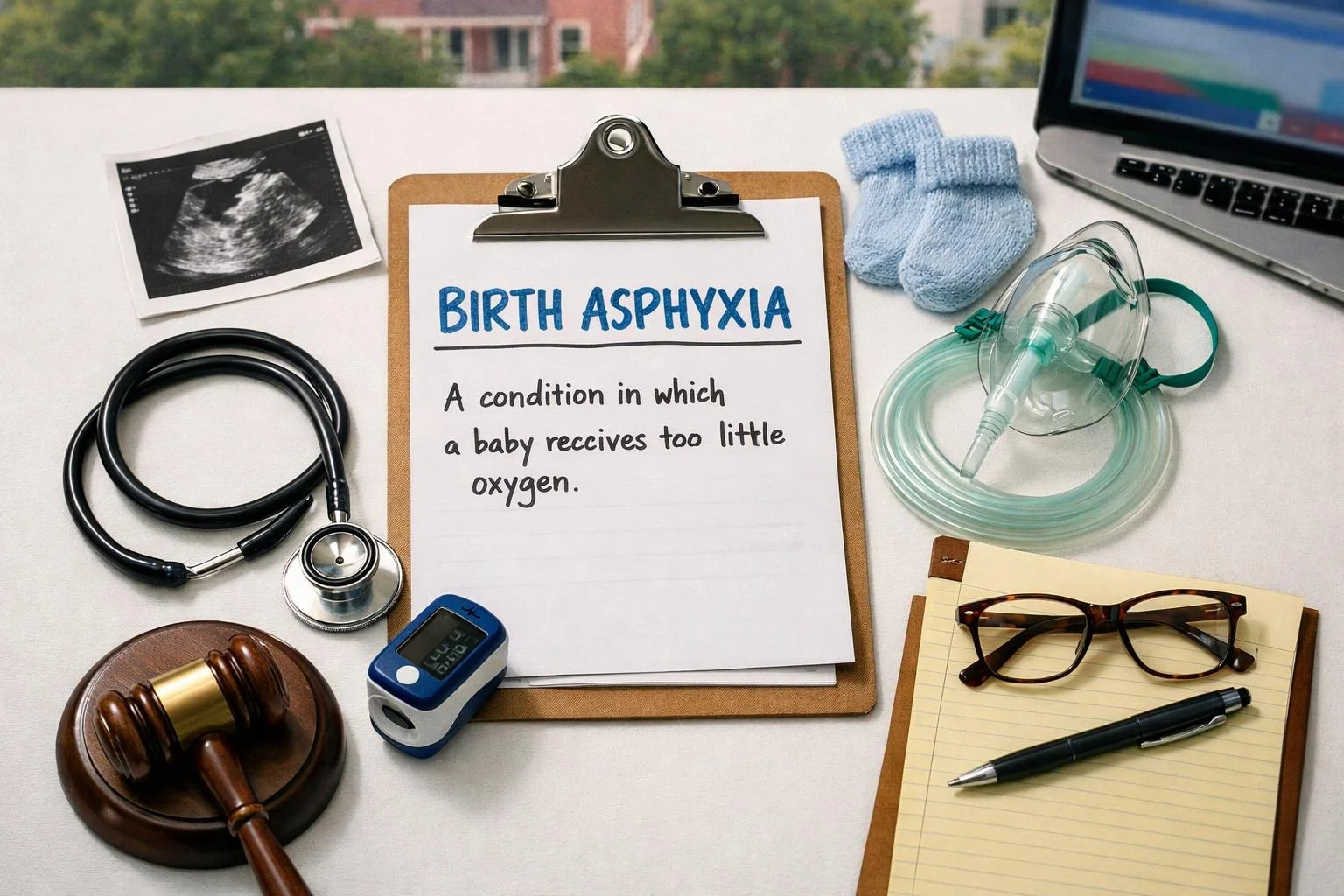
Birth Asphyxia is a condition in which a baby receives too little oxygen or blood flow around the time of birth. The shortage can affect the baby's brain and other organs. Its effects vary based on the cause, the extent of the shortage, and the care the baby receives.
Quick Facts About Birth Asphyxia
- Category
- Birth-related condition
- Used for
- Describing oxygen or blood flow problems around birth
- Common confusion
- Not the same as a finding of medical negligence
- Also called
- Perinatal Asphyxia
- Often discussed with
- Birth Injury Representation
Key Takeaways About Birth Asphyxia
- The condition involves oxygen supply, not a specific diagnosis of brain injury.
- Birth records can help explain what happened during delivery.
- A difficult delivery doesn't always mean medical negligence occurred.
How Birth Asphyxia Works

Birth asphyxia affects how a baby's cells get the oxygen they need. Blood carries oxygen to the brain and other organs. When that supply drops, cells may struggle to work normally. Related service: Birth Injury Representation.
Related glossary terms: Medical Malpractice, Negligence, Proximate Cause.
A problem with the placenta or umbilical cord can affect the baby's oxygen supply. The baby's own breathing may also be involved after delivery. The medical record can show what the care team observed and how the team responded.
Doctors may look at signs in the baby and results from blood tests. They may also review the fetal heart rate record and the course of delivery. These details help explain the baby's condition in context.
Hypoxic-ischemic encephalopathy, often called HIE, is a type of brain injury linked to reduced oxygen and blood flow. Birth asphyxia and HIE aren't interchangeable terms. A baby may have signs of oxygen shortage without a diagnosis of HIE.
From the Atlanta Auto Law team
When we review a birth injury claim, we look at the delivery record alongside the baby's later medical records. We focus on what the care team knew and how it responded. An injury alone doesn't establish that a provider acted negligently.
Birth Asphyxia in Practice: A Real-World Example
A baby's delivery record shows a prolonged drop in heart rate before birth. In a birth injury claim, an attorney reviews the record and the care team's response to understand whether a preventable error contributed to harm.
Related Services
Related Terms
Medical Malpractice
Medical Malpractice is a type of legal claim involving harm caused by a health care professional's failure to meet the accepted standard.
Negligence
Negligence is a failure to use reasonable care that causes harm to another person.
Proximate Cause
Proximate cause is a legal cause that connects someone's conduct to an injury closely enough to support liability.
Damages
Damages are money sought or awarded in a legal claim for harm or loss.
Atlanta Auto Law
Have Questions About Birth Asphyxia?
Contact Atlanta Auto Law for practical guidance on Birth Asphyxia and related personal injury attorney work in Atlanta.