
What Is Medication Reconciliation?
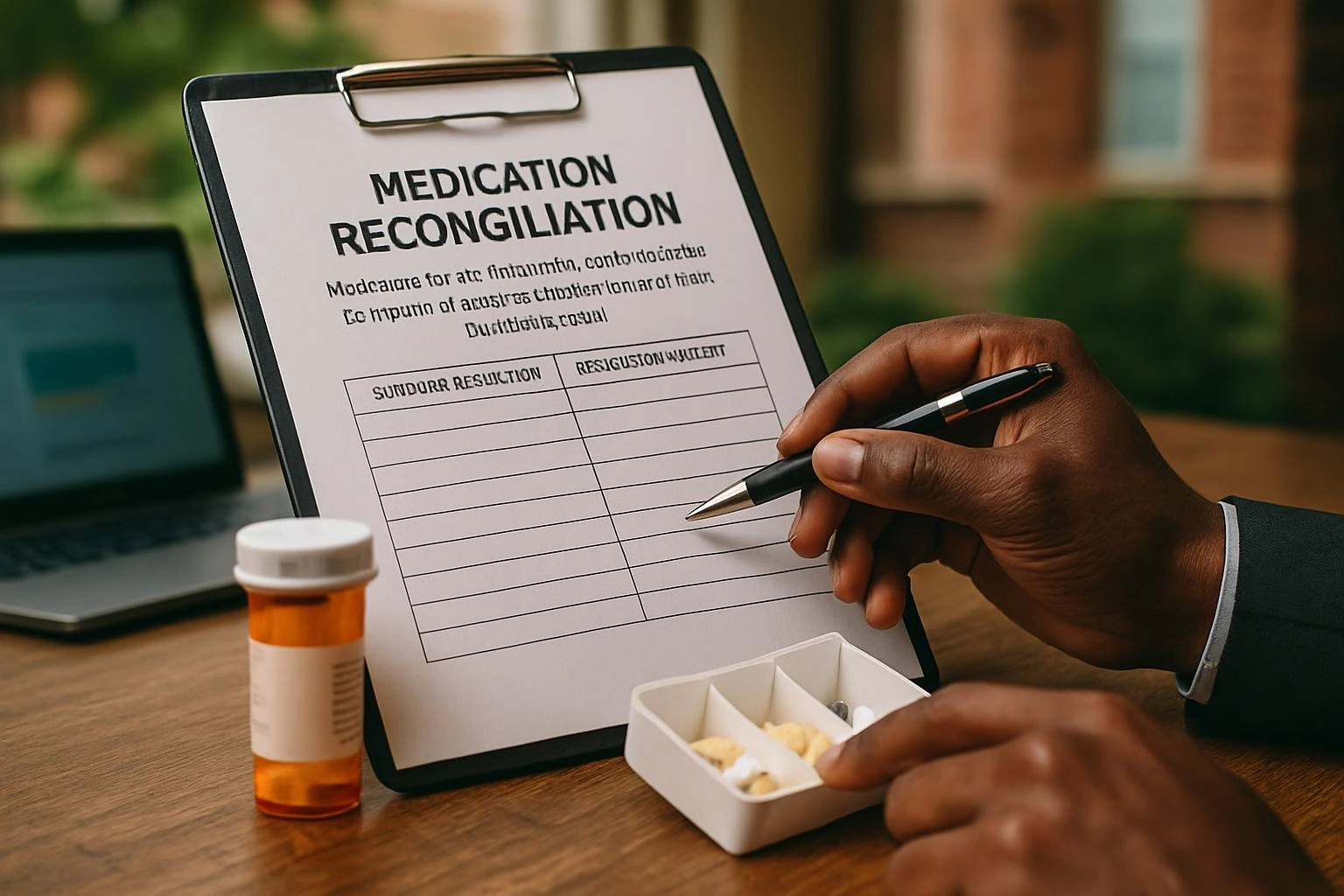
Medication Reconciliation is a process that compares a patient's medicines with the medicines listed in a care plan. A health care professional uses the comparison to identify differences that need attention. The process can take place when a patient enters, moves between, or leaves care settings.
Quick Facts About Medication Reconciliation
- Category
- Patient care process
- Used for
- Identifying medication differences
- Common confusion
- Creating a medication list
- Also called
- Med rec
- Often discussed with
- Medication Error Representation
Key Takeaways About Medication Reconciliation
- The process includes medicines from outside the current care setting.
- Patients can help by sharing their medication information.
- A medication list alone isn't the same as reconciliation.
How Medication Reconciliation Works

Medication reconciliation brings information from different sources into a patient's care record. A care team may review a patient's account alongside pharmacy records and current orders. These sources can show different names or doses for the same medicine. Related service: Medication Error Representation.
Related glossary terms: Medical Malpractice, Negligence, Duty of Care.
The care team considers whether each difference reflects a planned change or needs clarification. For example, a hospital order may leave out a medicine listed in an earlier record. The team can check the reason and document the outcome.
A medicine list records what a patient takes, but reconciliation involves more than making that list. The comparison and any resulting decisions help explain which information guided the care plan. That record can also show how a change reached the next care team.
From the Atlanta Auto Law team
When we review a medication error claim, we look at records from the care settings involved. We examine medication lists and orders for differences relevant to the claimed injury. We also look for notes that explain a change or a decision.
Medication Reconciliation in Practice: A Real-World Example
A patient enters a hospital after a car crash, and the hospital record omits a medicine the patient takes at home. If the patient later claims harm from that omission, medication error representation may involve reviewing the reconciliation record and related care notes.
Related Services
Related Terms
Medical Malpractice
Medical Malpractice is a type of legal claim involving harm caused by a health care professional's failure to meet the accepted standard.
Negligence
Negligence is a failure to use reasonable care that causes harm to another person.
Duty of Care
A duty of care is a legal obligation to act with reasonable care toward others.
Damages
Damages are money sought or awarded in a legal claim for harm or loss.
Atlanta Auto Law
Have Questions About Medication Reconciliation?
Contact Atlanta Auto Law for practical guidance on Medication Reconciliation and related personal injury attorney work in Atlanta.