How can I handle an insurer after a motorcycle accident?
Claim investigation gives you a fact-based response to the insurer. Atlanta Auto Law reviews the police report, medical records, policy terms, helmet evidence, and settlement materials before negotiations. Avoid guessing in a recorded statement, and preserve every document tied to treatment, wages, property damage, and insurance contact. The review shows which facts need support before you respond.
What documents should I bring to the first consultation?
Crash documents give the first consultation a useful factual base. Bring the police report, insurance letters, medical records, bills, photographs, wage records, and any settlement offer you received. Include helmet photographs or repair information when available. Missing records do not prevent a consultation, because our team can identify what still needs to be gathered.
Which part of the claim decides the work required?
The disputed issue usually controls the work required on a motorcycle claim. Fault evidence, injury proof, coverage limits, recorded statements, and settlement offers can each change the review. We focus first on the issue that threatens the claim's value or timing. The case may then move to negotiation, mediation, discovery, or trial preparation.
When should I discuss a settlement offer?
A settlement offer deserves legal review before acceptance. The offer may not account for ongoing treatment, lost wages, property damage, pain and suffering, or available coverage. We compare the offer with the records and policy materials that support the claim. The client then decides with a fuller view of the known losses and remaining issues.
Why does helmet evidence matter in a motorcycle claim?
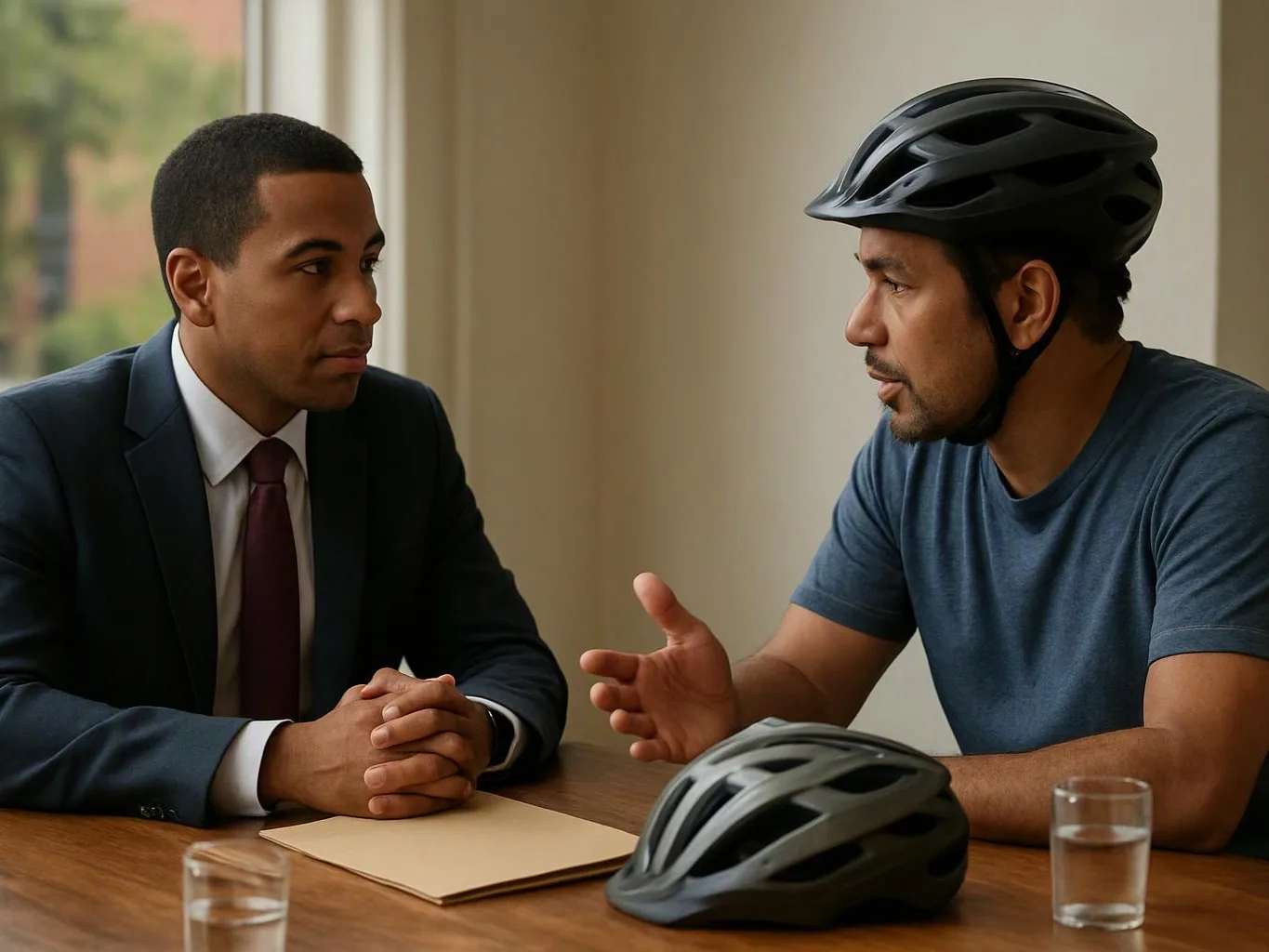
Helmet evidence can affect how an insurer assesses the injuries and the facts surrounding the crash. Photographs, medical records, witness information, and the helmet's condition may all matter. We examine those materials with the rest of the claim, because one item alone does not establish every issue. The evidence review guides the response to the insurer.
Which material changes how long the claim review takes?
The missing record that matters most can change the claim review time. Medical records, policy documents, wage proof, photographs, and the police report each answer different questions. We identify gaps during intake and request the records needed for evaluation. No fixed duration applies to every claim because the disputed issues differ.
How does representation move from the first call to the last step?
The process moves from intake to evidence review, claim assessment, negotiation, and possible litigation. We first gather crash and loss records, then review coverage and insurer communications. A demand letter or settlement discussion may follow. If negotiation fails, discovery, mediation, or trial representation may become the next step.