Skip to content

Driver-Assistance and Automated-Driving Collision Claims in Mableton

What happened during the control handoff in Mableton matters after a collision. We trace driver input, system warnings, and the road event before advising you.

Upfront, Transparent PricingServing 52 CommunitiesMon-Sun: Open 24 hoursFast Scheduling

Quick Summary: Driver-assistance collision claims in Mableton, Georgia

Driver-Assistance and Automated-Driving Collision Claims in Mableton are handled by Atlanta Auto Law for collisions involving system warnings, braking failures, lane departures, sensor obstruction, and control handoffs. We serve Atlanta, Fulton County, and nearby Georgia communities through consultation, insurance negotiation, settlement discussions, and trial representation.

  • What we do: Atlanta Auto Law investigates driver-assistance and automated-driving collision claims for people injured in Mableton, Georgia.
  • What is included: Evidence review, insurance negotiation, settlement discussions, and trial representation for automated-driving collisions.
  • What you get: The customer receives a defined claim strategy tied to the collision evidence, injuries, losses, and available legal remedies.

How are driver-assistance system failures investigated after a collision in Mableton, Georgia?

Control handoffs are investigated through vehicle data, system warnings, driver input, collision records, and medical evidence. Atlanta Auto Law compares those records with the reported event and the resulting injuries. That review helps identify whether braking, lane guidance, sensor obstruction, or warning failures affected the claim.
Driver-Assistance and Automated-Driving Collision Claims in Mableton, Georgia

This service is for people hurt when a driver-assistance feature or automated-driving function failed, behaved unexpectedly, or gave a warning that did not match the danger. The work may involve braking failures, lane departures, sensor obstruction, or warning failures.

The buyer's main decision is whether the case needs focused system evidence beyond a standard crash review. We gather police and medical records, examine available vehicle information, assess the insurance position, and build the claim around documented injuries and losses.

A system feature does not decide fault by itself. Driver actions, road conditions, vehicle maintenance, warnings, and the timing of the crash all matter. We help clients choose a path through insurance negotiation, mediation, settlement discussions, or trial when needed.

  • Identify the driver-assistance feature involved in the collision.
  • Preserve police reports, medical records, photographs, messages, and insurance letters.
  • Record system warnings, dashboard notices, and the driver's account while memories remain fresh.
  • Assess medical expenses, lost wages, property damage, pain and suffering, and other losses.
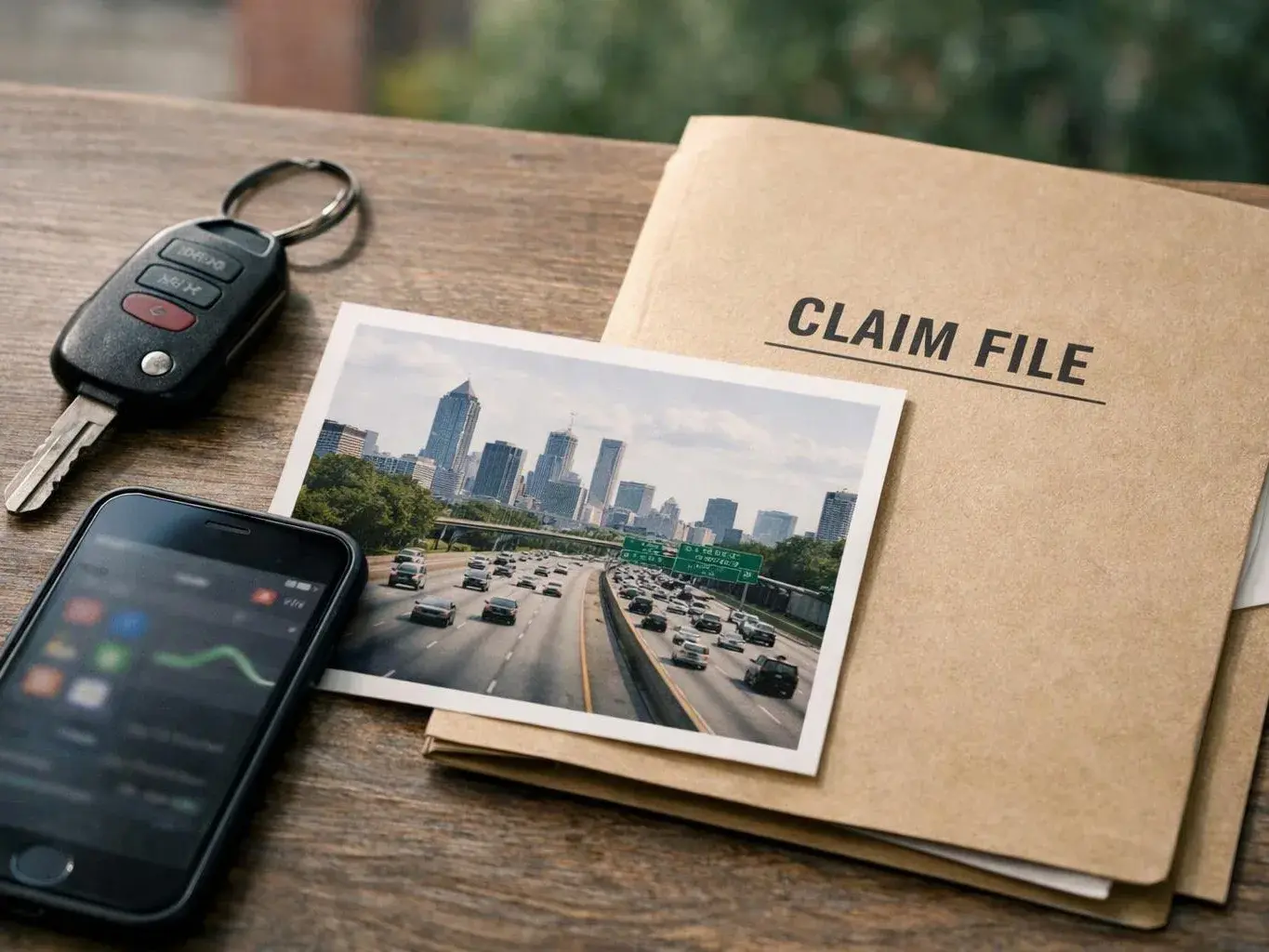
A claim file, car key, smartphone, and highway photo sit on a wooden table

Service Overview

Driver-assistance and automated-driving collision claims are legal claims that examine how vehicle systems, driver input, warnings, and road events contributed to an injury crash.

  • These claims differ from a basic car accident claim because system records and software-related evidence may matter alongside witness accounts and police records.
  • Atlanta Auto Law handles this work for clients in Mableton and surrounding Atlanta-area communities.

What focused system evidence changes for your claim

A focused review separates driver input from system behavior when both appear in the crash record.

Early evidence work helps preserve records that could become harder to obtain later.

Insurance discussions can address medical expenses, lost wages, property damage, pain and suffering, and other losses.

You receive a claim plan that reflects the collision facts instead of relying on a broad accident label.

Process

How we build a driver-assistance collision claim

1

Record the collision account

We take the client’s account and identify the driver-assistance feature, system warning, road event, and injury sequence.

2

Collect crash and medical records

We gather police records, medical records, photographs, insurance letters, witness details, and available vehicle information.

3

Test the system failure theory

We compare braking, lane guidance, sensor obstruction, warning timing, and driver input against the available evidence.

4

Set the insurance strategy

We assess damages and prepare insurance negotiation, a demand letter, settlement discussions, or mediation when appropriate.

5

Prepare for court when needed

If the claim does not settle, we use discovery and trial-ready litigation planning to present the evidence.

Why this collision claim approach fits the evidence

System evidence review

Driver-assistance claims need more than a basic crash summary. We compare warnings, driver input, vehicle records, and medical evidence. This service is the wrong fit when no injury or traffic-related loss exists.

Georgia-focused legal knowledge

Georgia personal injury rules shape how we assess negligence, damages, insurance positions, and settlement choices. Our experienced personal injury attorneys explain the legal effect of the records we review.

Trial-ready case planning

A disputed claim may require discovery, mediation, or trial preparation. We build the file around records and testimony so each next step has a clear purpose.

What driver-assistance collision claim work includes

Atlanta Auto Law provides comprehensive Driver-Assistance and Automated-Driving Collision Claims in Mableton. Here's what you get:

  • We review the crash account, police report, photographs, and available witness information.
  • We examine medical records and connect documented injuries to the collision.
  • We assess vehicle warnings, driver input, system behavior, and available vehicle data.
  • We handle insurance communications, demand letters, and settlement discussions.
  • We prepare discovery, mediation materials, and trial representation when the claim requires them.
  • We explain the claim path and next legal step in plain language.

The Atlanta Auto Law Standard

  • Careful Listening
  • Clear Explanations
  • Thorough Investigation
  • Clear Communication

Questions about system-related collision claims

How are control handoffs reviewed after a driver-assistance crash?

Control handoffs are reviewed by comparing driver input, system warnings, vehicle behavior, and collision timing. Atlanta Auto Law also examines police and medical records. The goal is to determine how the handoff fits the injury claim, not to assume that the vehicle system caused the crash.

What documents should I bring to the first consultation?

Crash documents help establish the event and the losses that followed. Bring the police report, medical records, photographs, insurance letters, witness details, and any dashboard warning images.

  • Police and incident records
  • Medical bills and treatment records
  • Vehicle, insurance, and warning information

Our team can identify further records during the consultation.

Which part of the vehicle decides the claim scope?

The involved feature and the injury evidence usually set the claim scope. Braking controls, lane guidance, sensors, warnings, driver input, and vehicle records may need review. The claim also includes damages such as medical expenses, lost wages, property damage, and pain and suffering when supported by the evidence.

When should I preserve vehicle warning information?

Vehicle warning information should be preserved as soon as possible after the crash. Photograph dashboard messages, save related phone records, and avoid deleting relevant communications. Early records can help compare the warning sequence with the driver’s account and the police report.

Why can a sensor obstruction matter in an injury claim?

Sensor obstruction can matter when it affects detection, braking, steering support, or warnings before impact. We compare photographs, repair records, system messages, and the collision account. That evidence helps determine whether the issue belongs in the claim or falls outside the available proof.

How does trial preparation affect an automated-driving claim?

Trial preparation requires organized evidence, witness planning, discovery, and a clear damages record. We prepare for that path when insurance negotiations or mediation do not resolve the claim. Past results don’t guarantee future outcomes, and every case is different.
Contact

Discuss your driver-assistance collision claim in Mableton

Schedule a consultation for a focused review of the collision records; urgent requests get priority scheduling.

ZIP Codes We Serve in Mableton, Georgia

30126

Driver-Assistance and Automated-Driving Collision Claims in Other Areas

The information on this website is for general informational purposes only and is not legal advice, does not create an attorney-client relationship, and may not reflect current law in Atlanta, Georgia, United States. Every situation is different; consult a licensed attorney about your specific matter. Prior results do not guarantee a similar outcome.

(678) 235-3870