Skip to content

Driver-Assistance and Automated-Driving Collision Claims Dunwoody

When safety alerts matter, Repair records help show what happened in Dunwoody. We examine those records with the collision evidence.

Upfront, Transparent PricingServing 52 CommunitiesMon-Sun: Open 24 hoursFast Scheduling

Quick Summary: Automated-Driving Collision Claims in Dunwoody, Georgia

Driver-Assistance and Automated-Driving Collision Claims in Dunwoody are handled by Atlanta Auto Law for collisions involving driver-assistance or automated-driving features. The firm serves Atlanta, Fulton County, DeKalb County, and nearby Georgia communities, with work that includes insurance negotiations and trial representation when needed.

  • What we do: Atlanta Auto Law handles Driver-Assistance and Automated-Driving Collision Claims for injured people in Dunwoody, Georgia.
  • What is included: evidence gathering, insurance negotiations, settlement discussions, and trial representation for collision claims involving driver-assistance features.
  • What you get: The client receives a developed claim record that supports a clear legal position about fault and losses.

What evidence supports an automated-driving collision claim?

Repair records support an automated-driving collision claim when they show vehicle condition, system work, or prior warnings. Event data, system alerts, inspection findings, and witness statements add context. Atlanta Auto Law reviews these sources with police and medical records, then connects the evidence to the client’s injuries and financial losses.
Driver-Assistance and Automated-Driving Collision Claims in Dunwoody

Driver-assistance collision work focuses on what the vehicle system did, what the driver was told, and what happened before impact. It fits people injured in crashes involving features such as lane guidance, forward collision warnings, adaptive cruise control, or automated braking.

The buyer’s key decision is whether the available evidence supports a claim against a driver, vehicle maker, software provider, or another party. We assess that question through evidence gathering, record review, insurance negotiation, and litigation planning. The claim can include medical expenses, lost wages, property damage, pain and suffering, and other losses.

This page serves Dunwoody clients who need a focused review of system evidence after a traffic collision. It does not replace DUI defense, workers compensation, or a claim based only on a contract dispute.

  • Identify which driver-assistance feature was active or issued a warning.
  • Preserve repair, service, and inspection records before they are lost.
  • Compare event data with system alerts and witness accounts.
  • Link the collision evidence to medical care, lost wages, and other losses.
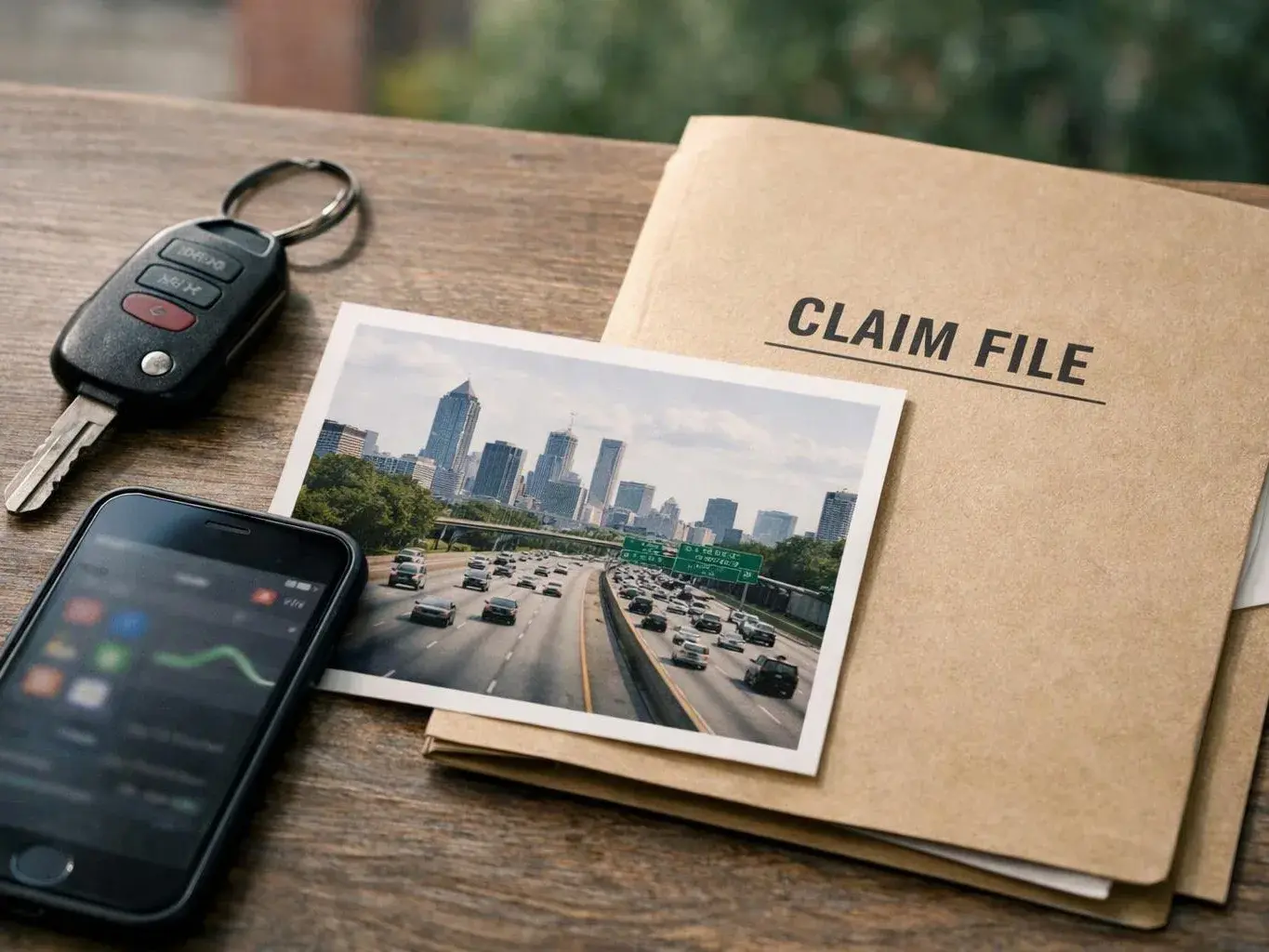
A claim file, car key, smartphone, and highway photo sit on a wooden table

Service Overview

Driver-assistance and automated-driving collision claims are legal claims that address injuries and losses linked to vehicle systems that guide, warn, or control driving.

  • These claims require system and vehicle evidence, while a standard car accident claim may rely more heavily on driver conduct and crash facts.
  • Atlanta Auto Law handles this work for clients in Dunwoody and nearby Georgia communities.

What automated-driving collision claims include

Atlanta Auto Law provides comprehensive Driver-Assistance and Automated-Driving Collision Claims in Dunwoody. Here's what you get:

  • We gather police and medical records that document the crash and resulting injuries.
  • We review Repair records for system work, vehicle condition, and prior warning signs.
  • We examine event data and system alerts when those sources are available.
  • We compare vehicle inspection findings with witness statements and the collision account.
  • We handle insurance negotiations and settlement discussions on the client’s behalf.
  • We prepare for discovery, mediation, and trial representation when the claim requires it.

What focused collision evidence changes

A focused evidence review helps separate driver conduct from system behavior.

The claim can address losses that extend beyond vehicle damage, including medical care and lost wages.

A written record of the evidence gives insurance discussions a clearer factual basis.

Early review helps preserve facts before a vehicle is repaired, sold, or altered.

What clients get from this claim review

A record-based liability review

We compare system alerts, event data, inspection findings, and witness accounts before taking a position on fault. This service is the wrong fit when no injury or compensable loss resulted from the collision.

Georgia-focused legal guidance

Our team applies Georgia personal injury law to the facts, insurance issues, and claimed losses. We explain the available path before settlement discussions move forward.

Trial-ready case planning

Discovery, mediation, and trial preparation remain available when negotiations do not resolve the claim. The work is shaped around the evidence in the individual collision.

Process

How we build the collision claim

1

Take the initial collision history

We record the crash details, injuries, vehicle features, insurance information, and immediate client concerns.

2

Gather the available records

We seek police and medical records, Repair records, event data, system alerts, photographs, and witness information.

3

Compare system and human evidence

Our team compares vehicle findings with witness accounts and the reported sequence of events.

4

Assess losses and legal options

We review medical expenses, lost wages, property damage, pain and suffering, and other claimed losses.

5

Pursue the appropriate claim path

We handle insurance negotiations and settlement discussions, then prepare for discovery, mediation, or trial when needed.

Evidence sources used in a collision claim

Each source answers a different question about the vehicle, the collision, or the resulting injury.

Evidence sourceWhat it may showHow we use it
Event dataVehicle actions and event sequenceCompare timing with the reported collision
System alertsWarnings, faults, or feature statusAssess what the vehicle communicated
Vehicle inspectionsPhysical damage and system conditionTest whether vehicle findings support the account
Witness statementsObserved traffic, warnings, and movementCompare human observations with vehicle records

The Atlanta Auto Law Standard

  • Careful Listening
  • Clear Explanations
  • Thorough Investigation
  • Clear Communication

Questions about automated-driving collision claims

What should be checked before this type of claim is scheduled?

The vehicle feature, injury link, available records, and insurance position should be checked first. A focused intake identifies whether the crash involved a warning, braking aid, lane system, or automated function. Photographs, repair documents, medical records, and witness details help us set the right evidence plan.

Who is a good fit for this claim, and who needs another service?

Injured people with losses tied to a driver-assistance or automated-driving collision are a good fit. Atlanta Auto Law handles the related personal injury claim. A person with no injury claim may need a property-damage discussion, while a criminal charge or employment injury requires a different legal service.

What happens at each stage of the claim?

The claim moves from intake and record gathering to evidence review, insurance negotiation, and possible litigation. We first document the crash and injuries. Next, we compare event data, alerts, inspections, and witness accounts. We then assess losses and pursue settlement, mediation, or trial when the facts call for it.

Which records should I preserve after a system-related crash?

Preserve the police report, medical records, photographs, repair file, insurance messages, and witness details. Do not discard vehicle warnings or service communications. Repair records can change as work continues, so keep copies of invoices, diagnostic notes, and parts information. We use these materials to shape the evidence review.

When should I speak with a personal injury attorney after the collision?

Speak with an attorney before key vehicle evidence changes or insurance discussions become difficult. Early contact helps protect photographs, vehicle records, witness details, and medical documentation. Atlanta Auto Law reviews the available facts through a Free Consultation and explains the next legal steps for the injury claim.

Will the firm represent me if the insurer will not settle?

Yes, Atlanta Auto Law provides trial representation when an injury claim does not settle. The case may move through discovery and mediation before trial. Our team builds the position from the collision evidence, medical records, claimed losses, and the insurer’s response. Every case is different, and results vary.
Contact

Discuss your automated-driving collision claim in Dunwoody

Start with a review of the collision records and available evidence, urgent requests get priority scheduling.

Driver-Assistance and Automated-Driving Collision Claims in Other Areas

The information on this website is for general informational purposes only and is not legal advice, does not create an attorney-client relationship, and may not reflect current law in Atlanta, Georgia, United States. Every situation is different; consult a licensed attorney about your specific matter. Prior results do not guarantee a similar outcome.

(678) 235-3870