Car Accident Mistakes to Avoid After a Crash
Car accident mistakes to avoid after a crash include leaving the scene, admitting fault, delaying medical care, failing to document evidence, posting online, accepting an early settlement, and missing claim obligations; Atlanta Auto Law reviews the facts, protects your rights, and handles car accident representation, hit-and-run accident representation, and uninsured motorist claim representation.
Request an EstimateWhat Should You Do Immediately After a Car Accident?
The safest first steps are to address immediate danger, contact emergency services when needed, exchange information, document the scene, and obtain medical evaluation for injuries.
Crash evidence can disappear when vehicles move, witnesses leave, or road conditions change. Our team helps preserve the facts that may support your car accident claim.
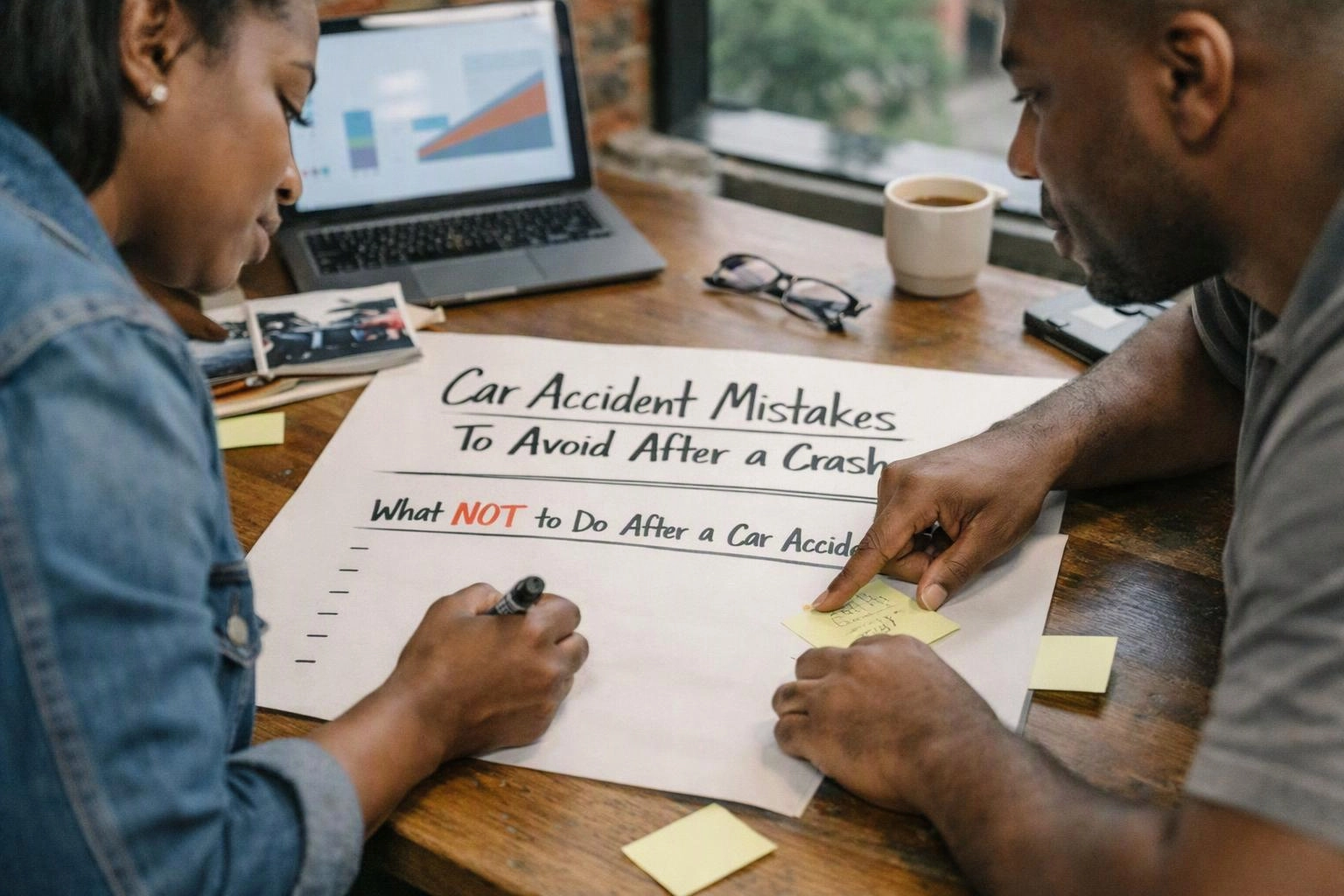
Which Car Accident Mistakes Can We Help You Avoid?
We help identify actions that can weaken a car accident claim, including incomplete records, unsupported fault arguments, and rushed settlement decisions.
Our review connects the crash facts to liability, medical care, property damage, lost income, and other damages. We also examine how the insurance company is handling the claim.
Leaving the Crash Scene Before You Have Taken Essential Steps
Leaving the crash scene without addressing safety, identification, and documentation can create a hit-and-run accident issue or make driver identification harder.
This mistake often happens when a person feels shaken, fears conflict, or believes the damage is minor. Leaving can cost you witnesses, scene evidence, and a clear record of what happened.
Stay as safely as possible, contact emergency services when needed, and collect available information. We can investigate the crash and pursue the available claim path when another driver leaves the scene.
Admitting Fault or Guessing About What Happened
Admitting fault or guessing about the collision can affect how insurers and investigators evaluate fault and liability.
People often apologize or offer quick opinions because they are upset or trying to be helpful. A statement that seems polite can later appear in a police report or claim file as an admission.
Give accurate facts without guessing, and avoid deciding fault at the scene. We compare statements, damage patterns, roadway conditions, and other evidence before addressing comparative fault.
Failing to Report the Collision or Preserve the Record
Failing to create an accident report or notify the relevant insurance company can leave gaps in the claim file.
A person may skip reporting because the vehicles seem drivable or the other driver promises to pay. That choice can cost important documentation and make later notice disputes harder to resolve.
Follow applicable reporting and policy requirements, and save photographs, messages, bills, and correspondence. We organize crash documentation and preserve evidence that supports the claim.
Delaying Medical Care or Ignoring Symptoms
Delaying medical care can make it harder to connect injury symptoms to the collision and can interrupt needed treatment.
Some injuries become noticeable after the immediate shock fades. Waiting can cost you timely medical records, consistent care, and evidence for a personal injury claim.
Seek a medical evaluation when symptoms appear and follow the treatment plan. We review medical records and connect documented injuries to the crash and claimed losses.
Failing to Photograph the Scene, Vehicles, and Injuries
Failing to photograph the crash scene can leave important facts about vehicle damage, road conditions, and visible injuries undocumented.
This mistake happens when people focus on moving traffic, helping passengers, or exchanging information. The cost can include lost evidence about impact points, lighting, debris, and vehicle positions.
Take clear photographs when it is safe, and keep the original files. We use available photographs and other scene evidence to evaluate the collision and damages.
Giving a Recorded Statement or Broad Medical Authorization Without Review
A recorded statement or broad medical authorization can give an insurance adjuster information that reaches beyond the crash and claimed injuries.
People may agree because an adjuster sounds helpful or suggests that cooperation will speed the claim. The cost can include privacy concerns, misleading excerpts, or unnecessary medical information in the investigation.
Ask what information is requested and obtain legal review before signing or recording broad responses. We help manage insurance communication and protect relevant privacy interests.
Posting About the Crash or Your Injuries Online
A social media post, photograph, or public statement can become claim evidence for an insurance defense.
People often post to update friends or share frustration without considering how a photo or caption may be read. The cost can include disputes about pain, activity, fault, or the seriousness of an injury.
Do not discuss the crash, injuries, treatment, or claim online. We assess available public statements and address how they may affect the insurance investigation.
Accepting a Settlement Before Your Injuries and Losses Are Clear
Accepting a settlement offer before your injuries and losses are clear can end claims for medical expenses, lost income, property damage, and future damages.
A quick offer may seem useful when bills are due or the insurance company is pressing for a decision. The cost can be an inadequate payment followed by a settlement release that limits further recovery.
Review the medical outlook, documented losses, and release language before accepting an offer. We evaluate settlement offers and explain how a proposed release may affect your legal claim.
Missing Insurance Deadlines, Policy Duties, or Legal Notices
Missing a claim deadline, notice requirement, policy duty, or legal notice can limit available insurance or legal options.
These deadlines are easy to overlook while you manage medical care, vehicle repairs, and work disruption. The cost can include a coverage dispute or difficulty presenting an uninsured motorist claim.
Keep every notice and correspondence, and track the requirements tied to each policy and claim. We review insurance coverage, uninsured motorist coverage, and applicable legal notices.
When Should You Call Atlanta Auto Law After a Crash?
Call Atlanta Auto Law when fault is disputed, injuries or financial losses are significant, the driver leaves or lacks insurance, or an insurer pressures you to provide statements or accept a settlement.
Early guidance can help protect evidence and prevent avoidable claim problems. Our team handles Car Accident Representation and reviews the facts before you make important decisions.
How We Review a Car Accident Claim
We review a car accident claim by examining the crash investigation, medical records, insurance coverage, liability evidence, and claimed damages.
Our team compares the police report, photographs, witness information, vehicle damage, and other crash evidence. We also review treatment records, lost income documentation, property damage, and communications with the insurance company.
That review helps us identify disputed facts, coverage issues, and weaknesses in a settlement offer. We then build a claim strategy that fits the available evidence and your losses.
What Information Should You Bring to a Car Accident Consultation?
The most useful consultation materials are records that show what happened, who may be responsible, what insurance applies, and how the crash affected you.
Bring what you have, even if the file is incomplete. Our team can identify the next records needed for the claim.
How Do You Protect Your Claim After a Crash?
You protect your claim after a crash by preserving evidence, following medical advice, controlling insurance communication, and evaluating any settlement before signing a release.
Keep a record of symptoms, treatment, missed work, expenses, and communications. Avoid public posts and do not guess about fault when answering questions.
We help with claim strategy, evidence preservation, insurance coverage, and settlement evaluation. Contact us to discuss your situation and learn how we can provide Hit-And-Run Accident Representation or uninsured motorist claim representation when those issues apply.
Contact Atlanta Auto Law for a consultation about your crash claim.
Get a Free EstimateQuestions About Car Accident Mistakes
Should I talk to the other driver's insurance company after a car accident?
Atlanta Auto Law recommends caution before giving a detailed statement or signing an authorization for the other driver's insurance company. Provide required notice, but let us review requests that concern fault, medical history, or settlement.
What should I do if the other driver leaves the scene?
Contact emergency services, seek medical care, preserve photographs and witness information, and notify your insurance company about the hit-and-run accident. We can review available evidence and possible uninsured motorist coverage.
Can I still make a car accident claim if I did not call the police?
Yes, you may still have a car accident claim if you did not call the police, but the missing police report can create an evidence gap. Preserve photographs, witness details, medical records, insurance notices, and other crash documentation.
What happens if the other driver has no insurance?
If the other driver has no insurance, your uninsured motorist coverage may provide a claim path, depending on the policy and facts. We review available coverage, fault evidence, injuries, and property damage.
Should I give a recorded statement after a car accident?
No, do not give a recorded statement before you understand what the insurance adjuster is asking and how the statement may be used. We can review the request and help protect accurate claim communication.
Can social media posts affect a car accident claim?
Yes, social media posts can affect a car accident claim when insurers use photographs, captions, or public statements to challenge fault or injury claims. Avoid posting about the crash, your treatment, or your activities while the claim is under review.
Related Resources
Benefits of Hiring a Car Accident Attorney After a Crash
Why It MattersWhy Hire an Attorney for an Uninsured Motorist Claim?
Compared ToStandard vs Comprehensive Car Accident Representation Engagements Compared (2026)
Compared ToLocal Specialist vs National Car Accident Representation Providers in Atlanta: Cost & Service Compared