Preparing Claims for Rideshare, Bus, Boating, Aviation, and Train Accidents
Rideshare, bus, boating, aviation, and train accident claims require organized evidence, a clear account of the incident, identified responsible parties, and records showing injuries and losses. Atlanta Auto Law reviews the available documentation, investigates applicable liability issues, and explains how the claim can proceed through Free Consultations.
Request an EstimateWhat Should You Do Before Discussing a Transportation Accident Claim?
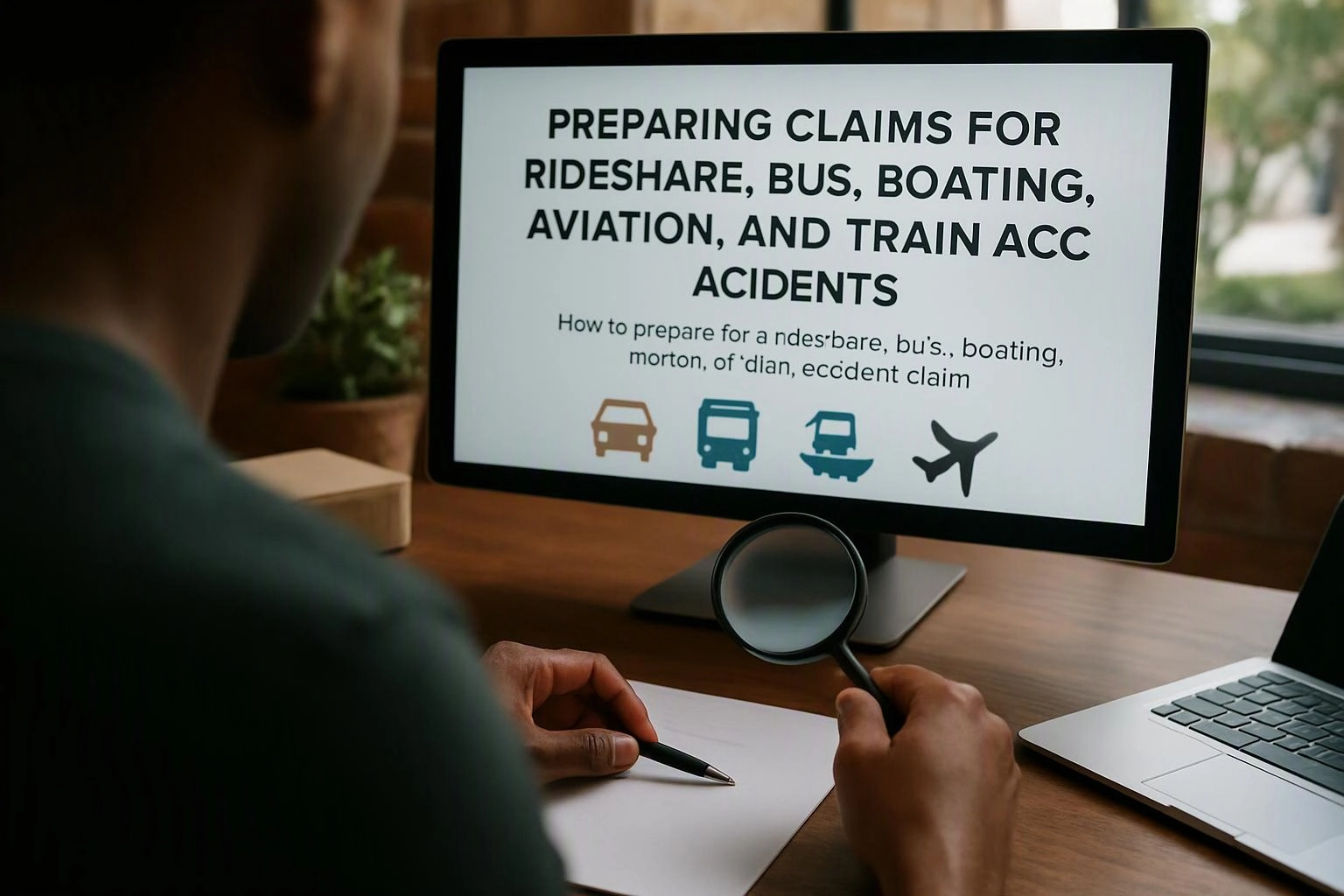
Transportation accident claim preparation starts with preserving evidence, obtaining appropriate medical care, recording what happened, and keeping documents related to injuries and financial losses.
Begin by writing down what you remember while the events are fresh. Preserve photographs, video, the accident scene details, and witness information. Seek medical treatment for symptoms and keep your medical records.
Keep the incident report, insurance correspondence, employment records, and lost income records together. Do not delete messages or app records connected to the trip or accident.
Which Documents Help Organize an Accident Claim?
An organized accident claim file brings together incident records, visual evidence, medical documentation, communications, and proof of financial impact.
We use these materials to compare the reported events with the available evidence. The file also helps identify responsible parties and evaluate personal injury damages.
How Do Rideshare Accident Claims Differ From Other Vehicle Claims?
A rideshare accident claim requires review of the rideshare driver's activity, passenger or trip status, available insurance policies, and the actions of every potentially responsible driver.
The rideshare platform may hold app records showing whether the driver was offline, available, traveling to a passenger, or carrying a passenger. That status can affect which commercial insurance or personal auto insurance policy may apply.
Our liability investigation also considers the rideshare driver, a third-party driver, the platform, vehicle condition, and road conditions. We preserve relevant app records and compare each account with the physical evidence.
What Should You Ask About a Rideshare Accident Claim?
Questions about a rideshare accident claim should focus on records, insurance coverage, driver status, passenger status, fault evidence, and claim communications.
What Should You Discuss After a Bus Accident?
A bus accident claim should address the bus operator, the vehicle owner, possible maintenance or driver issues, applicable notice requirements, and the evidence connecting the accident to the injury.
A public bus may involve a transit authority or another public entity. A private bus or school bus may involve a commercial transportation operator, school system, contractor, owner, or insurer.
We examine maintenance records, driver conduct, vehicle condition, passenger records, and available surveillance video. We also identify notice requirements and government liability rules that may affect the claim.
What Belongs on a Bus Accident Case Checklist?
A bus accident case checklist should identify the bus, route, operator, passengers, witnesses, medical treatment, and applicable claim procedures.
What Must Be Evaluated in a Boating Accident Claim?
A boating accident claim requires examination of operator conduct, vessel ownership and condition, navigation circumstances, waterway evidence, and the legal rules that apply to the incident.
We identify the boat operator, boat owner, passengers, and any other vessel involved in the collision. We review vessel condition, navigation conduct, visibility, warnings, and the waterway where the accident occurred.
Maritime law may affect the legal claim, depending on the location and circumstances. A Coast Guard report, photographs, witness information, vessel records, and medical records can help connect the accident to the injury.
How Is an Aviation Accident Claim Prepared?
An aviation accident claim is prepared by identifying the aircraft and operators involved, preserving passenger and medical records, and evaluating pilot, maintenance, equipment, and operational evidence.
Potentially responsible parties may include an aircraft operator, airline, charter company, pilot, aircraft owner, or maintenance provider. We examine aircraft records, passenger records, maintenance information, operational communications, and available witness evidence.
Records from the Federal Aviation Administration and National Transportation Safety Board may help explain the accident investigation. We use those materials with medical documentation to evaluate personal injury and other damages.
How Do You Prepare for a Train Accident Claim?
A train accident claim is prepared by documenting the train, route, location, operator, witnesses, medical harm, and evidence concerning tracks, signals, crossing conditions, or railroad operations.
The responsible party may be a railroad, train operator, public entity, property owner, or another driver. We determine whether the incident involved a passenger train, commuter rail, freight train, rail crossing, or another railroad operation.
Railroad records may include track inspections, signal information, operating records, crossing evidence, and maintenance records. We preserve these materials and compare them with the accident report, photographs, video, and witness accounts.
How Do Liability and Evidence Compare Across Accident Types?
Liability depends on the transportation type, the people and entities controlling the vehicle or operation, the applicable insurance or public-entity rules, and the evidence showing what caused the accident.
Each transportation accident requires a focused review of operator conduct, records, insurance coverage, and the connection between the accident and the injury.
| Accident type | Liability issues | Important evidence |
|---|---|---|
| Rideshare | Driver status, platform involvement, third-party liability, and insurance coverage. | App records, driver information, photographs, video, and insurance communications. |
| Bus | Operator conduct, vehicle ownership, maintenance, commercial insurance, and public entity rules. | Passenger records, surveillance video, maintenance records, and incident reports. |
| Boating | Operator negligence, vessel ownership, navigation conduct, and maritime law. | Coast Guard reports, vessel information, waterway evidence, and witness statements. |
| Aviation | Pilot conduct, aircraft operation, maintenance, equipment, and airline or charter responsibility. | Aircraft records, passenger records, maintenance information, and investigation materials. |
| Train | Railroad operations, train operator conduct, track condition, signals, and public entity rules. | Railroad records, crossing evidence, signal information, video, and medical records. |
How Atlanta Auto Law Evaluates a Transportation Accident Claim
Atlanta Auto Law evaluates the incident facts, responsible parties, available insurance, evidence, injuries, and losses to determine how the claim can be supported and pursued.
We begin with an accident investigation and evidence preservation. Our team reviews reports, photographs, video, witness information, app records, carrier records, maintenance records, and other available materials.
We then conduct a liability analysis and organize medical records, medical treatment information, lost income, property damage, and other damages. We explain how an insurance claim, settlement discussion, or litigation strategy may proceed.
What Should You Ask During an Initial Claim Consultation?
An initial claim consultation should clarify who may be responsible, which evidence matters, how communications should be handled, and what information is needed to evaluate the case.
Bring the accident report, insurance communications, photographs, witness information, medical records, employment records, and documents showing financial losses when available.
Questions About Transportation Accident Claims
What evidence should I preserve after a rideshare accident?
Atlanta Auto Law recommends preserving app records, trip information, photographs, video, the accident report, witness information, insurance correspondence, and medical records after a rideshare accident.
Who may be responsible for injuries in a bus accident?
Bus accident responsibility may involve the bus operator, vehicle owner, transit authority, school system, maintenance provider, commercial transportation operator, another driver, or a public entity.
Do boating accident claims involve maritime law?
Yes, boating accident claims may involve maritime law when the location and facts bring those rules into the case. The boat, waterway, operator conduct, vessel condition, and collision circumstances help determine the applicable legal framework.
What records matter in an aviation accident investigation?
Aviation accident records may include aircraft records, passenger records, pilot information, maintenance records, operational materials, medical records, and reports from the Federal Aviation Administration or National Transportation Safety Board.
Can a railroad be responsible for a train accident?
Yes, a railroad may be responsible when its operations, train operator conduct, tracks, signals, crossing conditions, or maintenance contributed to the accident. The available railroad records and other evidence must support that connection.
Should I give an insurer a recorded statement after a transportation accident?
A recorded statement should be handled carefully because the wording may affect an insurance claim. Review the request, identify the insurer's role, and discuss the communication before providing a statement.
What information should I bring to a transportation accident consultation?
Bring the accident report, photographs, video, witness information, insurance communications, medical records, medical bills, employment records, and documents showing lost income or other financial losses.
Discuss Your Transportation Accident Claim
Transportation accident claims require careful evidence preservation, liability analysis, injury documentation, and damages evaluation. Atlanta Auto Law can review your claim materials and explain the next steps for an insurance claim, settlement, or litigation.
Contact Atlanta Auto Law to discuss your transportation accident claim through Free Consultations.
Related Resources
How Personal Injury Attorney Fees and Agreements Work
Everything About ItHow to Prepare for a Personal Injury Attorney Consultation
Everything About ItHow to Prepare a Car Accident Claim and Attorney Consultation
Everything About ItPreparing a Workplace or Construction Accident Claim