How to prepare for a bicycle or pedestrian accident case
Preparing for a bicycle or pedestrian accident case means securing medical records, preserving physical and digital evidence, documenting losses, identifying witnesses, and organizing a clear timeline. Atlanta Auto Law uses these materials to evaluate liability, injury, insurance issues, and the next steps for bicycle accident representation or pedestrian accident representation.
Request an EstimateWhat Should You Do Immediately After a Bicycle or Pedestrian Accident?
The first steps after a bicycle or pedestrian accident are protecting personal safety, obtaining medical care, reporting the collision when appropriate, and preserving available evidence. Your immediate actions can protect both your health and your potential personal injury claim.
Move away from traffic when you can do so safely, and avoid arguing with the driver. Then take these steps:
Medical care and personal safety come first. Evidence gathered later can still help explain the accident, but temporary conditions at the scene may change.
How Do You Document a Bicycle or Pedestrian Accident Claim?
Documenting a bicycle or pedestrian accident claim means creating a dated record of the scene, visible injuries, property damage, medical care, and facts that may show how the collision occurred. We use this record to compare physical evidence with witness accounts, reports, and insurance information.
Take scene photographs from several useful angles if it is safe. Include the roadway conditions, traffic signals, crosswalk, signs, lighting, weather conditions, vehicle position, bicycle damage, clothing, and safety equipment. Do not repair, discard, or clean damaged items before they are documented.
Look for video footage from nearby businesses, homes, traffic systems, or vehicles. Surveillance footage may be overwritten, so write down where cameras appear and tell us about possible recordings during the claim investigation.
Keep injury documentation consistent with your medical treatment. Note symptoms, diagnoses, appointments, prescriptions, rehabilitation, and changes in your ability to work or complete daily activities.
What Evidence Belongs on a Bicycle or Pedestrian Accident Checklist?
A bicycle or pedestrian accident checklist should include records that explain what happened, who may be responsible, and how the injury affected your life. Gather what you have and keep the original files unchanged.
Organize digital files with clear descriptions and dates. Keep physical items in a safe place so the evidence remains available for review.
How Should You Organize Your Injury and Financial Records?
Organize injury and financial records chronologically so the case file connects the collision to treatment, daily limitations, expenses, and income losses. A clear file helps us examine causation, bodily injury, and the losses included in an insurance claim.
Start with the accident timeline and place each medical visit after the collision in date order. Include the diagnosis, treatment instructions, prescription records, rehabilitation, referrals, and changes in symptoms.
Keep receipts and records for out-of-pocket expenses in the same file. Add information about lost income, missed work, reduced duties, and possible future losses when those issues arise.
Your notes should describe pain and limitations in plain terms. Explain how the injury affects sleep, movement, personal care, household tasks, travel, and work without guessing about medical conclusions.
What Should You Know Before Contacting a Bicycle Accident Attorney?
Before contacting a bicycle accident attorney, prepare a concise timeline, gather available evidence, preserve records, and describe medical treatment and insurance communications accurately. We can begin a case evaluation with a clear account of the accident, injuries, and losses.
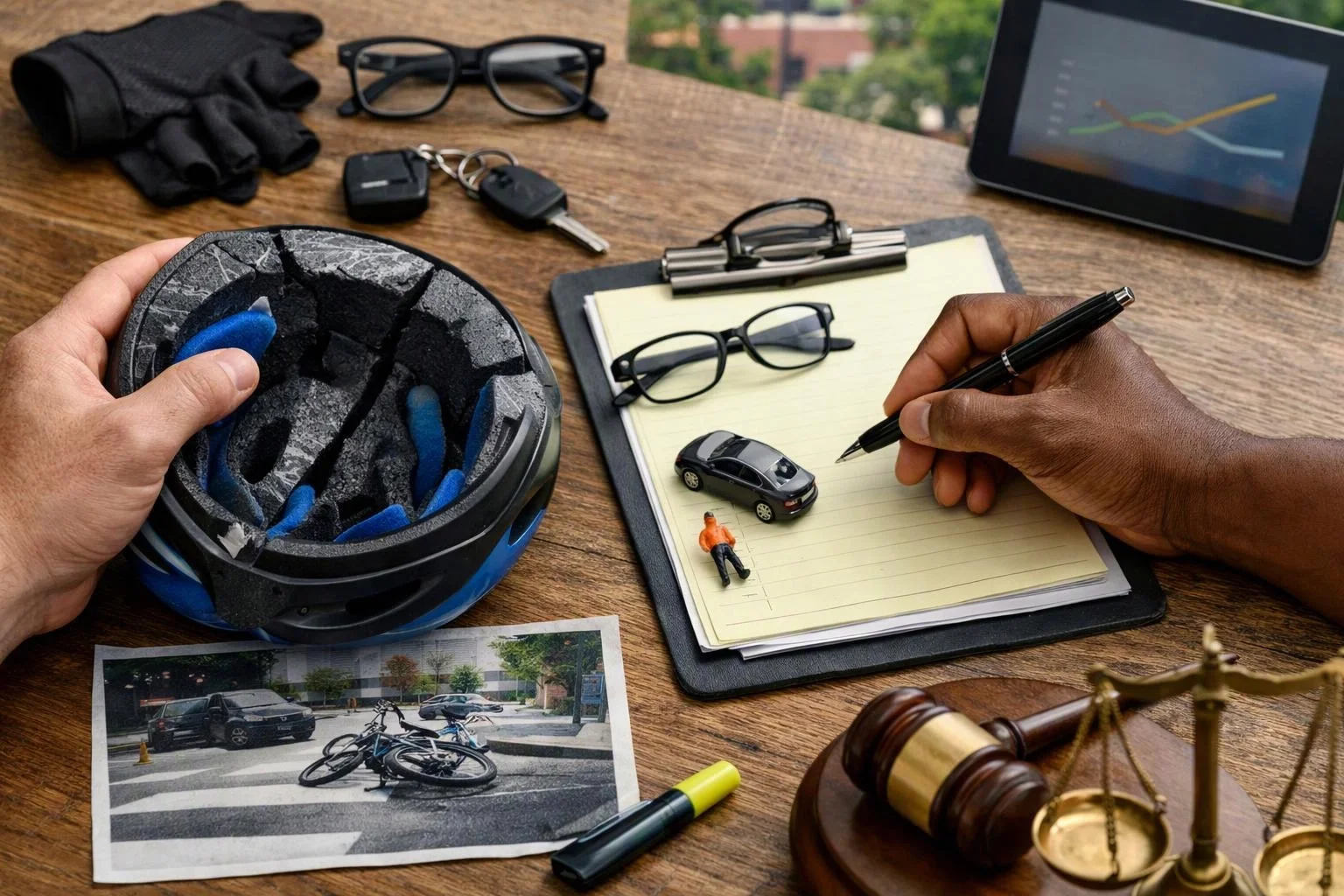
Write down where the collision occurred, how the bicycle or vehicle moved, what the traffic signal showed, whether a crosswalk or right of way was involved, and what happened after impact. Include the driver information, witnesses, police report, bicycle damage, and any video evidence.
Keep communications with the insurance adjuster in one file. Do not guess about fault, recovery, or the full extent of your injuries when answering questions.
Bring medical records, medical bills, wage loss records, photographs, and insurance documents to the attorney consultation. This information helps us assess negligence, liability, comparative fault, and possible claim strategy.
When May a Pedestrian Accident Attorney Help?
A pedestrian accident attorney may help when liability, injury severity, insurance coverage, evidence preservation, or the value of losses requires focused case analysis. We review the facts that may show driver negligence, a breach of the duty of care, causation, or a dispute about right of way.
A crosswalk or traffic signal may be important, but those facts do not answer every liability question by themselves. We examine the driver's actions, roadway conditions, visibility, vehicle information, witness accounts, and available video.
Legal help may be useful when the injury is serious, the driver disputes fault, the insurance claim becomes difficult, or a hit-and-run injury claim leaves important facts unresolved. We also work to preserve evidence and organize the records needed for claim documentation and a settlement demand.
How Does Atlanta Auto Law Review a Bicycle or Pedestrian Accident Case?
Atlanta Auto Law reviews the accident facts, available evidence, injury records, insurance information, and losses to identify the issues that shape the claim strategy. Our review is designed to connect the accident timeline with liability, medical treatment, property damage, and financial harm.
Our case review follows an organized process:
We use the same evidence-first approach for bicycle accident representation and pedestrian accident representation. The details of each bicycle crash or pedestrian collision determine which records and legal issues receive the most attention.
What Should You Avoid While Preparing an Accident Case?
While preparing an accident case, avoid deleting evidence, speculating about fault, discussing the claim publicly, or giving inaccurate statements about injuries and events. Careless communications can create confusion about what happened and how the injury developed.
Do not post photographs, comments, or updates about the accident or your activities on social media. Do not provide a recorded statement to an insurance adjuster before you understand what is being asked and how the statement may be used.
Preserve damaged clothing, equipment, and the bicycle. Do not repair or discard property damage before it is photographed and reviewed.
Continue reasonable medical care and follow treatment instructions. Tell medical providers about changes in symptoms, and keep the insurance communications with your other claim records.
How Can You Prepare for the Initial Case Discussion?
Prepare for the initial case discussion by bringing a short accident summary, contact information, medical records, insurance documents, and an inventory of available evidence. These materials help us understand the collision without requiring you to remember every detail during the meeting.
Atlanta Auto Law uses the discussion to identify the strongest evidence and the issues that need more investigation. You can contact our team through the contact option below to begin organizing the case.
Questions About Preparing an Accident Case
Should I speak with the insurance company before preparing my accident records?
Atlanta Auto Law recommends organizing the available accident and medical records before giving detailed insurance communications. Accurate information matters, and our team can review the claim history, adjuster requests, and evidence before you respond.
What if I do not have photographs of the bicycle or pedestrian accident scene?
A missing scene photograph does not end a bicycle or pedestrian accident claim. Other evidence may include the police report, witness statements, surveillance footage, medical records, vehicle information, roadway photos taken later, and physical damage.
Can witnesses help prove how a bicycle or pedestrian accident happened?
Yes, witnesses can help describe the vehicle's movement, traffic signal, crosswalk, roadway conditions, impact, and events immediately afterward. Preserve each witness's contact information and avoid asking witnesses to change or expand their account.
What records show how an accident affected my work and daily activities?
Medical records, employer records, wage loss information, receipts, treatment notes, and a personal journal can show changes in work and daily activities. Specific notes about missed duties, reduced tasks, pain, and physical limitations help connect the injury to its effects.
How should I preserve bicycle damage after a collision?
Preserve bicycle damage by photographing the bicycle, keeping damaged parts together, saving repair records, and avoiding repairs or disposal until the damage is documented. Store the bicycle and related equipment safely so the condition remains available for review.
What information should I bring to a bicycle or pedestrian accident consultation?
Bring an accident summary, contact details, medical records, medical bills, insurance documents, photographs, the police report, witness information, video details, bicycle damage records, and wage loss information. A dated accident timeline also helps explain the injury and claim history.
Contact Atlanta Auto Law to discuss the evidence, injury records, insurance issues, and losses connected to your bicycle or pedestrian accident case.
Get a Free EstimateRelated Resources
How Personal Injury Attorney Fees and Agreements Work
Everything About ItHow to Prepare for a Personal Injury Attorney Consultation
Everything About ItHow to Prepare a Car Accident Claim and Attorney Consultation
Everything About ItPreparing a Workplace or Construction Accident Claim