
What Is Bad Faith?
Bad Faith is an insurer’s unfair handling of a valid insurance claim, shown by conduct such as unreasonable denial, delay, or refusal to investigate. In an uninsured motorist claim, the issue focuses on whether the insurer treated the claim fairly under the policy and the available facts, not simply whether the insurer disputed payment.
Quick Facts About Bad Faith
Category
Insurance claim conduct
Used for
Uninsured motorist claims
Common confusion
Any claim denial
Also called
Insurance Bad Faith, Insurer Bad Faith
Often discussed with
Uninsured Motorist Claim Representation
Key Takeaways About Bad Faith
- Bad Faith concerns claim handling conduct, not just a denied payment.
- Claim records and policy language help show how the insurer acted.
- A disputed claim is not automatically a Bad Faith claim.
How Bad Faith Works
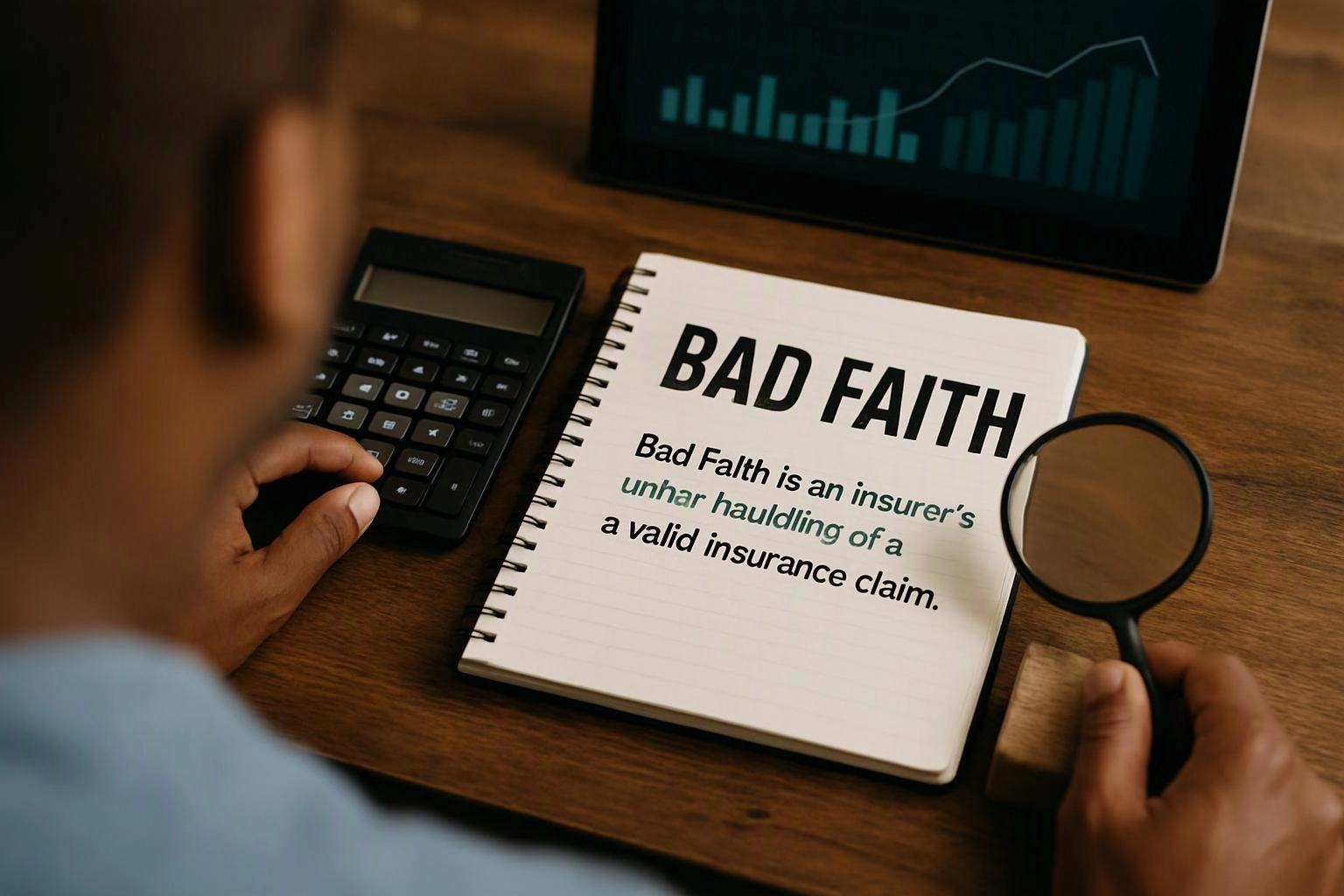
Bad Faith in an uninsured motorist claim describes conduct that may show an insurer failed to handle the claim fairly. The analysis considers the policy, the available evidence, the insurer’s investigation, and the reasons given for its position. A disagreement over value does not by itself establish Bad Faith.
Related glossary terms: Demand Letter, Damages.
Claim handling records can show how the issue developed. Relevant material may include written requests, recorded statements, medical records, crash evidence, settlement communications, and explanations for delays or denials. Uninsured Motorist Coverage can apply when the responsible driver lacks required insurance or cannot be identified, but the policy still controls the available protection. Demand Letters and other claim communications may help document what information the insurer received and how the insurer responded.
From the Atlanta Auto Law team
When we review a possible Bad Faith issue, we organize the policy, claim communications, available liability evidence, and damages records. We compare the insurer’s stated position with the information supplied during the uninsured motorist claim. That review helps separate a legitimate coverage dispute from conduct that may support a Bad Faith argument.
Bad Faith in Practice: A Real-World Example
A driver with uninsured motorist coverage submits crash evidence, medical records, and information about the responsible driver. The insurer repeatedly delays its review without explaining what information it needs, then rejects the claim without addressing the submitted evidence.
Related Services
Related Terms
Demand Letter
A demand letter is a formal written request for payment sent to an insurer or responsible…
Damages
Damages are the monetary compensation sought or awarded in a personal injury claim for losses caused…
Atlanta Auto Law
Have Questions About Bad Faith?
Contact Atlanta Auto Law for practical guidance on Bad Faith and related personal injury attorney work in Georgia.